
Hygrotus
Stephens, 1828
Species Guides
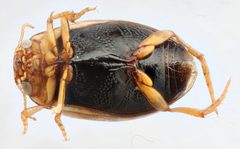
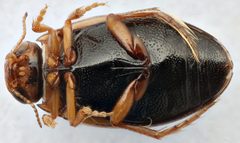
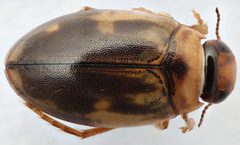
24Hygrotus is a of predaceous diving beetles ( Dytiscidae) comprising approximately 70 distributed across two subgenera: Coelambus and Hygrotus. Species in this genus are primarily associated with freshwater ranging from small temporary pools to permanent water bodies. Habitat partitioning has been documented among sympatric species based on water chemistry, permanence, and vegetation structure.
Pronunciation
How to pronounce Hygrotus: //haɪˈɡroʊtəs//
These audio files are automatically generated. While they are not always 100% accurate, they are a good starting point.
Images
Habitat
Freshwater environments including small temporary pools, peat-ditches, reed-lands, overgrown ditches, clay- and sand-canals, and larger permanent waters. Structural features such as water depth and vegetation abundance and growth-form appear more important than chemical factors in selection. Some show preferences for acidic conditions (H. decoratus), neutral to slightly alkaline waters (H. versicolor), or broad (H. inaequalis).
Distribution
Widespread across the Palearctic; recorded from Denmark, Norway, Sweden, the Netherlands, Britain, and northeastern North America (Vermont, USA).
Behavior
partitioning among sympatric has been observed, with co-occurrence patterns influenced by differences in environmental requirements. H. decoratus and H. versicolor rarely co-exist due to divergent habitat preferences, while both frequently co-occur with H. inaequalis.
More Details
Subgeneric classification
The contains two subgenera: Coelambus and Hygrotus. The Catalogue of Life lists Hygrotus as both a genus and a subgenus, reflecting historical taxonomic complexity in this group.
Habitat specificity
Among Dutch , H. decoratus is acidophilous and haloxenous, inhabiting small water bodies with abundant emergent vegetation; H. versicolor prefers permanent waters with pH 7.1-8.0, chlorinity 60-200 mg/L, and rich submerged vegetation; H. inaequalis shows no clear preferences across the variables examined.