
Hydrovatus platycornis
Young, 1963
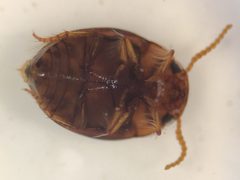
Hydrovatus platycornis is a of predaceous diving beetle in the Dytiscidae, described by Young in 1963. It belongs to the tribe Hydrovatini within the Hydroporinae. The species is known from North America. Like other members of its , it is likely a small diving adapted to aquatic .
Pronunciation
How to pronounce Hydrovatus platycornis: /haɪdroʊˈvɑːtəs ˌplætɪˈkɔːrnɪs/
These audio files are automatically generated. While they are not always 100% accurate, they are a good starting point.
Identification
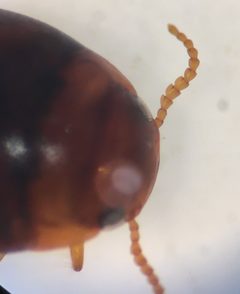
The specific epithet "platycornis" refers to the flattened (broad) characteristic of this . In the Hydrovatus, members are generally small diving beetles with compact bodies. Accurate identification to species level requires examination of male genitalia and other microscopic features.
Images
Habitat
As a member of Dytiscidae, this is aquatic. Members of the Hydrovatus are typically found in lentic (still water) including ponds, marshes, and slow-moving waters with vegetation.
Distribution
North America. Specific distribution details beyond continental records are not well documented in available sources.
Ecological Role
As a predaceous diving beetle, this likely functions as a of small aquatic in freshwater . Members of Dytiscidae contribute to nutrient cycling and serve as food sources for larger aquatic predators.
Similar Taxa
- Hydrovatus pustulatusAnother North American in the same ; distinguished by differences in male genitalia and antennal structure
- Hydrovatus cuspidatusCongeneric with overlapping distribution; requires detailed examination of and pronotal shape for separation
More Details
Taxonomic history
Described by Young in 1963, this has received limited study. The Hydrovatus contains approximately 50 species worldwide, with several occurring in North America. The flat that give this species its name are a distinctive feature within the genus.