
Hydrovatus
Motschulsky, 1853
Species Guides
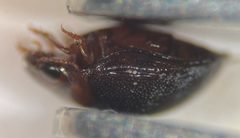
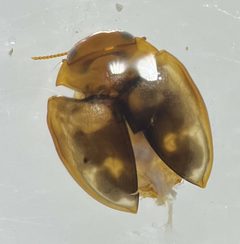
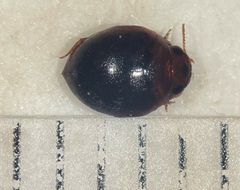
6Hydrovatus is a of diving beetles in the Dytiscidae, Hydroporinae, and tribe Hydrovatini. The genus comprises approximately 214 globally, with documented presence across Asia, Europe, and the Americas. Members are aquatic beetles inhabiting lentic and slow-moving lotic freshwater environments. The genus was established by Motschulsky in 1853.
Pronunciation
How to pronounce Hydrovatus: //haɪˈdrɒvɑːtəs//
These audio files are automatically generated. While they are not always 100% accurate, they are a good starting point.
Images
Habitat
Freshwater aquatic environments including ponds, lakes, and slow-moving streams. Specific microhabitat preferences within these systems are not well documented for the as a whole.
Distribution
distribution with records from India (18 ), Taiwan (8 species), Southeast Asia, Colombia (Atlántico, Bolívar, Santander departments), Denmark, and Norway. The has been documented on multiple continents but comprehensive global distribution mapping is incomplete.
More Details
Taxonomic diversity
The contains approximately 214 described globally, making it one of the more species-rich genera within the Hydroporinae. India alone 18 species, with recent faunistic surveys identifying eight species in museum collections including H. obtusus, H. acuminatus, H. bonvouloiri, H. cardoni, H. castaneus, H. confertus, H. fractus, and H. pinguis.
Research gaps
Despite the large number of described , detailed biological and ecological studies of Hydrovatus remain limited. Most published literature focuses on faunistic records, new country records, and taxonomic descriptions rather than behavioral, physiological, or ecological research.
Sources and further reading
- BugGuide
- Wikipedia
- GBIF taxonomy match
- iNaturalist taxon
- NCBI Taxonomy
- Catalogue of Life
- First records of the diving beetles Hydrovatus subrotundatus Motschulsky, 1859 and Hydrovatus pudicus (Clark, 1863) in Taiwan (Coleoptera, Dytiscidae, Hydroporinae, Hydrovatini)
- Faunistic Records of the genus <i>Hydrovatus</i> Motschulsky, 1853 (Coleoptera: Dytiscidae: Hydroporinae) from India