
Pasimachus californicus
Chaudoir, 1850
California warrior beetle
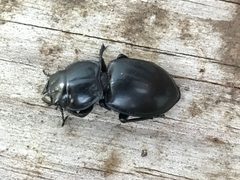
Pasimachus californicus, commonly known as the California warrior , is a large ground beetle in the Carabidae. It is native to the southwestern United States and Mexico, where it inhabits mixed oak woodlands and juniper-pinyon-oak woodlands. The is an active that hunts at night and is considered beneficial for agricultural and natural due to its on pest insects.
Pronunciation
How to pronounce Pasimachus californicus: /ˌpæsɪˈmeɪkəs ˌkælɪˈfɔrnɪkəs/
These audio files are automatically generated. While they are not always 100% accurate, they are a good starting point.
Identification
Large, robust ground beetle with a somewhat flattened body form typical of the Pasimachus. Distinguished from other ground beetles by its large size and activity pattern in woodland of the southwestern U.S. and Mexico. Specific diagnostic characters separating it from congeneric require examination of male genitalia and detailed morphological analysis.
Images
Habitat
Mixed oak woodlands, juniper-pinyon-oak woodlands, and montane coniferous forests. Observed in juniper woodland at Black Mesa State Park, Oklahoma, and in montane coniferous forest at 9000 feet elevation in the Lincoln National Forest, New Mexico.
Distribution
Southern Great Plains and southwestern United States (Oklahoma, New Mexico, Texas, Arizona, California) and Mexico. GBIF records confirm presence in Mexico and the United States.
Seasonality
Active primarily during warmer months. Observed in June in Oklahoma and New Mexico, with active at night during this period.
Diet
that consumes a variety of insects, caterpillars, and small . Specific prey records from the field observations include unspecified insects encountered in woodland at night.
Behavior
Nocturnally active, on roads and ground surfaces at night in woodland . Observed at night in juniper woodland and montane coniferous forest. May bite if handled or threatened, though the bite is described as a minor pinch without venom.
Ecological Role
in woodland , contributing to regulation of insect . Considered a beneficial insect in agricultural and natural settings due to on potential pest .
Human Relevance
Considered beneficial for pest control. Not harmful to humans but may deliver a defensive bite if threatened. Has no venom and is not known to carry human .
Similar Taxa
- Pasimachus marginatusSimilar large ground beetle in the same , overlapping in range in parts of the southwestern U.S.; requires examination of male genitalia for definitive separation
- Pasimachus elongatusAnother large Pasimachus with potentially overlapping distribution; morphological differences in body proportions and male genitalia structure used for identification
More Details
Taxonomic authority
First described by Maximilien Chaudoir in 1850