
Amara familiaris
(Duftschmid, 1812)
Social Sun Beetle
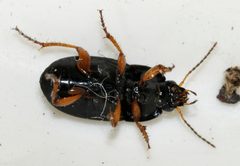
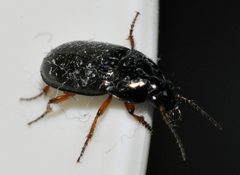
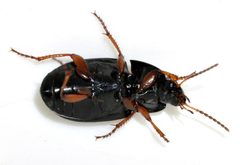
Amara familiaris is a ground beetle in the Carabidae, native to Europe with introduced in North America. It is commonly known as the Social Sun . The species belongs to the large Amara, which contains numerous similar-looking ground beetles. Its distribution spans multiple continents due to human-mediated .
Pronunciation
How to pronounce Amara familiaris: /əˈmɑːrə fəˌmɪlɪˈɛərɪs/
These audio files are automatically generated. While they are not always 100% accurate, they are a good starting point.
Identification
Distinguished from other Amara by subtle morphological characters typical of the , including body proportions and elytral . Accurate identification to species level requires examination of genitalia and other fine structural details. Similar to other small to medium-sized Amara beetles with dark, often somewhat shiny and pronotum.
Images
Habitat
Open, sunny including grasslands, agricultural fields, gardens, and disturbed areas. Often associated with dry, warm conditions where it can be found under stones or debris.
Distribution
Native to Europe. Introduced and established in North America, with records from Alaska, Canada, and the contiguous United States. Also reported from parts of the Balkans including Albania and former Yugoslavia.
Behavior
Aggregates in groups, which may relate to its 'Social Sun .' Ground-dwelling habits typical of Carabidae, likely active as both and forager.
Human Relevance
Documented specimen in digitization efforts for natural history collections. Subject of imaging studies for biodiversity data infrastructure.
Similar Taxa
- Other Amara speciesNumerous congeneric share general body form and coloration, requiring detailed examination for reliable separation.
Sources and further reading
- BugGuide
- Wikipedia
- GBIF taxonomy match
- iNaturalist taxon
- NCBI Taxonomy
- Learning About Bees at the UC Davis Bee Haven | Bug Squad
- Study: More IPM Knowledge Could Help Leafy Amaranth Farmers in East Africa
- Quick Guide to Armyworms on Soybean | Beetles In The Bush
- Pensoft took a BiCIKL to report on a FAIR data endeavour
- digitisation | Blog
- The Drugs (Neonicotinoids) Don’t Work 5 - Buglife Blog - Buglife