
Stenomorphus
Dejean, 1831
Species Guides
3- Stenomorphus californicus(Plains Oar-necked Carabid)
- Stenomorphus convexior
- Stenomorphus sinaloae
Stenomorphus is a of ground beetles (Carabidae: Harpalini) comprising six recognized distributed in Middle America and the Greater Antilles. Phylogenetic analysis supports three monophyletic species-groups: the S. convexior group, the S. sinaloae group, and the S. angustatus group. The genus exhibits distinctive evolutionary trends involving allometric changes in prothorax shape and hind tibiae proportions, correlated with and adaptations.
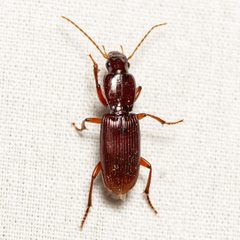
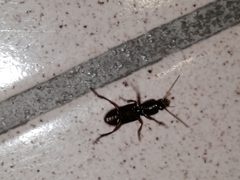
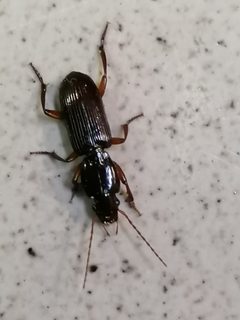
Pronunciation
How to pronounce Stenomorphus: //ˌstɛnəˈmɔrfəs//
These audio files are automatically generated. While they are not always 100% accurate, they are a good starting point.
Identification
Members of Stenomorphus can be distinguished from related by structural features of the legs, prothorax proportions, male genitalia (form of lobe and armature of internal sac), and ovipositor . The genus belongs to the Stenomorphus genus-group alongside Anisocnemus and Trichopselaphus, with Anisocnemus as the adelphotaxon of Trichopselaphus + Stenomorphus. -level identification relies on diagnostic structural features and geographic distribution.
Images
Habitat
Drier tropical forests and savannas. The is specialized for (burrowing) life, with structural adaptations reflecting this habit.
Distribution
Middle America (primary region of ancestral isolation and diversification); Greater Antilles (reached via over-water with subsequent isolation and differentiation); South America (presence of related adelphotaxon Anisocnemus).
Behavior
(burrowing) habits. is pronounced, with allometric trends in prothorax proportions and hind tibiae correlated with sex.
Similar Taxa
- AnisocnemusSister to the clade of Trichopselaphus + Stenomorphus; distinguished by structural features of legs, prothorax, male genitalia, and ovipositor
- TrichopselaphusSister to Stenomorphus within the Stenomorphus genus-group; distinguished by structural features of legs, prothorax, male genitalia, and ovipositor
More Details
Phylogenetic relationships
Six recognized with established : S. convexior; S. penicillatus + S. sinaloae; and S. cubanus + (S. angustatus + S. californicus). Three monophyletic species-groups defined: S. convexior group, S. sinaloae group, and S. angustatus group.
Evolutionary history
Geographic history reconstructed as: isolation in Middle America from South American ancestral stock; specialization for drier tropical forests and savannas; isolation and differentiation driven by cyclical climatic changes and mountain building; over-water to Greater Antilles with subsequent isolation and differentiation.
Taxonomic changes
Stenomorphus dentifemoratus Chaudoir, 1844 and Stenomorphus alius Darlington, 1936 synonymized; S. dentifemoratus Darlington, 1936 (not Chaudoir) renamed S. darlingtoni. New subspecific combinations established for S. angustatus (three ) and S. californicus (four subspecies).