
Piosoma setosum
LeConte, 1847
Piosoma setosum is a of ground beetle in the Carabidae, notable as the sole member of its . First described by LeConte in 1847, this occurs in North America. The genus name derives from Greek, reflecting its distinctive setose (bristly) characteristics. Despite its taxonomic uniqueness, detailed biological information remains limited.
Pronunciation
How to pronounce Piosoma setosum: //paɪˈoʊsəmə sɪˈtoʊsəm//
These audio files are automatically generated. While they are not always 100% accurate, they are a good starting point.
Identification
Distinguished from other Carabidae by the combination of dense setae covering the body and its placement within the Piosoma. The genus-level assignment requires examination of male genitalia and other internal structures. May be confused with other harpaline beetles, particularly those in related genera such as Harpalus or Anisodactylus, but the pronounced setosity and specific genitalic separate it.
Images
Appearance
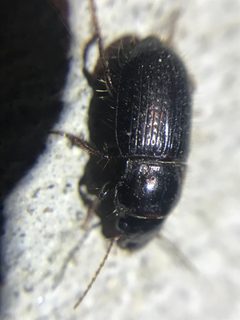
A small to medium-sized ground beetle with a notably setose (bristly) body surface, as indicated by the epithet "setosum" and name meaning "bristle body." Body form typical of harpaline ground beetles, with thread-like and hardened forewings () covering the . Specific coloration and detailed morphological features require direct specimen examination.
Distribution
Recorded from Canada and the United States. Specific preferences within this range are not well documented in available sources.
Ecological Role
As a member of Carabidae, likely functions as a or scavenger in soil and ground-level , though specific ecological contributions have not been documented.
Similar Taxa
- Harpalus spp.Similar body form and size; distinguished by Piosoma's denser setosity and different genitalic structure.
- Anisodactylus spp.Overlapping distribution and general harpaline ; separated by setal and -level diagnostic characters.
More Details
Taxonomic uniqueness
Piosoma is one of many within Carabidae, reflecting either genuine evolutionary distinctiveness or insufficient taxonomic study. The genus was established based on distinctive setal characteristics that separate it from related harpaline genera.
Etymology
The name Piosoma derives from Greek 'pion' (fat, rich) or possibly 'pios' (dove) combined 'soma' (body), though more likely refers to the setose (bristly) body indicated by 'pios' as a variant of 'pilos' (hair). The epithet 'setosum' directly references the bristly condition.