
Cryptocercus
Scudder, 1862
wood roach, brown-hooded cockroach
Species Guides
5- Cryptocercus clevelandi
- Cryptocercus darwini
- Cryptocercus garciai(wood roach)
- Cryptocercus punctulatus(brown-hooded cockroach)
- Cryptocercus wrighti
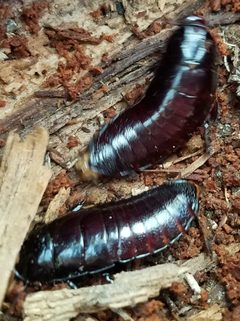
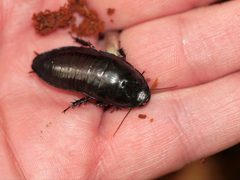
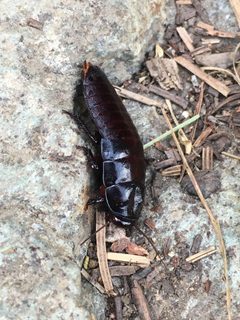
Cryptocercus is a of wingless, wood-feeding representing the sole member of Cryptocercidae. These subsocial insects exhibit extended parental care and family-based social structure. The genus holds exceptional phylogenetic significance as the closest living relative to , sharing lignocellulose-digesting gut and providing key evidence for the evolutionary origin of termite eusociality from cockroach ancestors. Twelve described inhabit temperate forests of North America and eastern Asia.
Pronunciation
How to pronounce Cryptocercus: //ˌkrɪpˌtoʊˈsɜːrkəs//
These audio files are automatically generated. While they are not always 100% accurate, they are a good starting point.
Identification
Wingless throughout all life stages; distinguished from other by this trait combined with obligate association with decaying wood. Separated from by retention of cockroach-like morphological features including chewing mouthparts and absence of true . Cryptocercidae is at the level, making -level identification equivalent to family recognition.
Images
Habitat
Mature temperate forests; strictly associated with rotting wood for food and shelter at all life stages. Occupies decaying logs and stumps in montane and lowland forest environments. Distribution tied to forest persistence and strongly influenced by paleogeographical events.
Distribution
Disjunct distribution in Nearctic and Palearctic regions. Nearctic: eastern and western North America (Southern Appalachian Mountains from New York to Alabama, plus western North American ). Palearctic: eastern Asia including China, Korea, Russian Far East, and Japan.
Diet
Wood (xylophagy); feeds exclusively on decaying wood. Digestion dependent on symbiotic gut bacteria and protists shared with .
Life Cycle
Extended structure with slow development associated with wood-feeding diet. Biparental care with offspring retention in family unit; young require considerable parental interaction. Developmental stages include prolonged nymphal period within parental nest.
Behavior
Subsocial with monogamous pair bonds and biparental care. groups occupy and defend wood galleries. Limited observations suggest territorial in some . No true ; social organization represents intermediate stage between solitary and eusocial .
Ecological Role
Wood decomposer in temperate forest ; contributes to lignocellulose breakdown and nutrient cycling through xylophagy.
Human Relevance
Scientific importance as evolutionary link between cockroaches and termites; model organism for studying origins of eusociality and lignocellulose digestion. No significant pest status; restricted to natural forest .
Similar Taxa
- Termites (Isoptera/Termitoidae)Shared wood-feeding , gut , and phylogenetic ancestry; distinguished by true eusociality with and typically different body plan
- Other BlattodeaWingless condition and obligate wood-feeding with extended parental care unique to Cryptocercus; most winged at least in males, with different ecological habits
Sources and further reading
- BugGuide
- Wikipedia
- GBIF taxonomy match
- iNaturalist taxon
- NCBI Taxonomy
- Catalogue of Life
- In a Cannibalistic Society, It’s Not About Survival—It’s All About Recycling
- Distribution of Cryptocercus pinctulata
- Phylogenetic Status, Distribution, and Biogeography of Cryptocercus (Dictyoptera: Cryptocercidae)
- Evolution in the genus Cryptocercus (Dictyoptera: Cryptocercidae): no evidence of differential adaptation to hosts or elevation
- Cryptocercus punctulatus (Dictyoptera: Cryptocercidae) from Monadnocks in the Piedmont of North Carolina
- Biogeography and Phylogeny of Wood-feeding Cockroaches in the Genus Cryptocercus
- Territorial behavior of the Korean wood-feeding cockroach, Cryptocercus kyebangensis
- Reproduction in the Woodroach Cryptocercus punctulatus Scudder (Dictyoptera: Cryptocercidae): Mating, Oviposition, and Hatch
- Distribution of Karyotypes of the Cryptocercus punctulatus Species Complex (Blattodea: Cryptocercidae) in Great Smoky Mountains National Park
- The life cycle ofAdelina cryptocercisp.nov., a coccidian parasite of the roachCryptocercus punctulatus
- Life history and population dynamics of Korean woodroach ( Cryptocercus kyebangensis ) populations
- Reference gene selection for transcriptional profiling in Cryptocercus punctulatus, an evolutionary link between Isoptera and Blattodea
- Cryptocercus Genomes Expand Knowledge of Adaptations to Xylophagy and Termite Sociality.
- Discovery and genomics of H(2)-oxidizing/O(2)-reducing Deferribacterota ectosymbiotic with protists in the guts of termites and a Cryptocercus cockroach.
- Disentangling Gut Bacterial Community Patterns in Cryptocercus punctulatus and Comparing Their Metagenomes with Other Xylophagous Dyctioptera Insects.