
Supella
Shelford, 1911
brown-banded cockroaches
Species Guides
1- Supella longipalpa(brown-banded cockroach)
Supella is a of small, in the Ectobiidae, with the brown-banded cockroach (S. longipalpa) being the most widespread and well-known . Native to Africa and the Arabian Peninsula, the genus has achieved distribution through human-mediated transport. Members of this genus are distinguished by transverse pale bands across the wings and , pronounced in wing development, and a preference for warm, dry indoor environments. The type species S. longipalpa is a significant public health pest that completes its entire within human-built structures.
Pronunciation
How to pronounce Supella: /suˈpɛl.la/
These audio files are automatically generated. While they are not always 100% accurate, they are a good starting point.
Identification
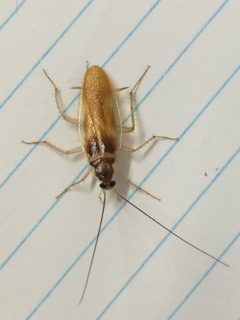
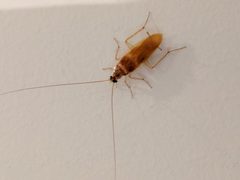
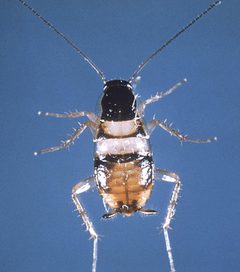
Supella are distinguished from other domestic by two pale transverse bands across the wings and —features that are especially visible in nymphs before wings develop. is pronounced: males possess fully developed wings that extend beyond the abdomen and functional hindwings enabling , while females have short, non-functional forewings (tegmina) that leave most of the abdomen exposed. The is smaller than Periplaneta (American cockroaches) and differs from Blattella germanica in body shape and banding pattern. Females are readily identified by their broad, rounded bodies and abbreviated wings.
Images
Habitat
Primarily indoor environments; strongly associated with human-built structures. Prefers warmer, drier locations than many other domestic , including behind wall-mounted pictures, inside electrical appliances, furniture, and computer equipment. In natural settings, some occur in wild in Africa and the Arabian Peninsula.
Distribution
in distribution due to human-mediated transport. Native to Africa and the Arabian Peninsula; now established worldwide in urban environments. Documented across North America (present in 47 of 48 contiguous U.S. states by 1967, excluding Vermont), Europe (including first records from Baltic countries in 2016), Asia, and other inhabited continents.
Seasonality
Active year-round in indoor environments with stable temperatures. Activity patterns show circadian rhythmicity with peak behavioral responses and calling occurring during scotophase (dark period).
Diet
; feeds on starchy materials including bookbinding paste, wallpaper paste, and food residues. In laboratory colonies, thrives on standard rat food and dog chow. Consumes including starch, glucose, and sucrose when available.
Life Cycle
Hemimetabolous development with . Undergoes 6–8 from early instar nymphs through late instar nymphs to . Females carry capsules () externally for 24–36 hours before depositing them on rough vertical surfaces. Oothecae frequently deposited in clusters on upper wall surfaces and corrugated cardboard. Entire completed strictly indoors for .
Behavior
Females exhibit strong oviposition site fidelity, returning to preferred locations for capsule deposition. Males demonstrate circadian rhythmicity in response to female , with peak responsiveness during scotophase; responsiveness increases with age and peaks approximately 10 days after . Females exhibit calling with peak activity in scotophase. When disturbed, males are quick to fly while females remain flightless. Aggregates in harborages.
Ecological Role
Public health pest; serves as mechanical for and source of allergen exposure. Gut microbiome dominated by Lactobacillus and Akkermansia may provide resistance against ingested human pathogens. Serves as for oothecal including Comperia merceti and Anastatus tenuipes. Some harbor endosymbionts that may influence reproductive .
Human Relevance
Significant domestic pest, particularly S. longipalpa, which infests homes, universities, restaurants, and food premises worldwide. Associated with poor perception, food , and allergen exposure. Nicknamed "TV roach" due to habit of sheltering in electrical appliances; body fluids from molting or dead specimens can cause short circuits. Subject of automated detection research using AI and computer vision for monitoring in urban pest management.
Similar Taxa
- Blattella germanicaGerman cockroach is similar in size and domestic but lacks the transverse pale bands; has fully winged females and different thermal preferences.
- Periplaneta americanaAmerican cockroach is substantially larger, lacks banding pattern, and prefers moister environments.
- Blatta lateralisTurkestan cockroach shares similar size range and domestic tendencies but lacks distinct banding and shows different wing in females.
Sources and further reading
- BugGuide
- Wikipedia
- GBIF taxonomy match
- iNaturalist taxon
- NCBI Taxonomy
- Catalogue of Life
- A New Cockroach in Town? | Bug Squad
- Bug Eric: All Grown Up
- Bug Eric: The "University Roach"
- Bug Eric: January 2010
- Wolbachia in Cockroaches: A New Paradigm for Urban Pest Management?
- How Artificial Intelligence is Helping Automate Cockroach Surveillance in Cities
- Moniliformis moniliformis Increases Cryptic Behaviors in the Cockroach Supella longipalpa
- Endosymbiont and gut bacterial communities of the brown-banded cockroach, Supella longipalpa
- OVIPOSITION BEHAVIOR AND SITE PREFERENCE OF THE BROWNBANDED COCKROACH, SUPELLA LONGIPALPA (F.) (DICTYOPTERA: BLATTELLIDAE)
- Habitation was confirmed of the Japanese mainland by the Brown banded cockroach <i>Supella longipalpa</i> (Fabricius)
- First record of the alien cockroach Supella longipalpa (Fabricius, 1798) (Blattodea, Pseudophyllodromiidae) from the Baltic countries
- Comparative biological parameters of Comperia merceti (compere) (Hym., Encyrtidae) and Anastatus tenuipes bolivar (Hym., Eupelmidae), oothecal parasitoids of the cockroach Supella longipalpa (Fab.)
- Female Calling and Reproductive Behavior in the Brown Banded Cockroach, Supella longipalpa (F.) (Orthoptera: Blattellidae)1
- Effects of dextrin and cellulose on feeding and reproduction in female brown‐banded cockroaches, Supella longipalpa
- Supella supellectilium Serv. (Insectes Dictyoptères), une espèce de blatte domestique qui semble se répandre dans la région lyonnaise
- The physiological basis for the termination of pheromone-releasing behaviour in the female brown-banded cockroach, Supella longipalpa (F.) (Dictyoptera: Blattellidae)
- The corpus allatum in relation to sexual behaviour and aggressiveness in male Supella supellectilium (Serville) (Blattoidea: Blattellidae)
- Food Detection and Feeding Behavior of Three Species of Household Cockroaches, Blatella germanica (L.), Periplaneta americana (L.), and Supella longipalpa (F.)
- Circadian rhythmicity and development of the behavioural response to sex pheromone in male brown‐banded cockroaches, Supella longipalpa
- Circadian calling behavior of the adult female brown-banded cockroach,Supella longipalpa (F.) (Dictyoptera: Blattellidae)
- New data on the genus Supella Shelford, 1911 (Dictyoptera: Pseudophyllodromiidae) with description of female of S. eocenica Anisyutkin et Perkovsky, 2023 from Rovno amber