
Cariblatta lutea
Saussure & Zehntner, 1893
small yellow cockroach
Cariblatta lutea is a small native to the southeastern United States and Cuba, with typically measuring 7–9.5 mm. The species comprises two : C. l. lutea (small yellow cockroach) and C. l. minima (least yellow cockroach), which differ in size, wing length, and male genitalia structure. Both subspecies inhabit ground-level vegetation litter and have been documented in diverse plant including pine flatlands, hardwood hammocks, and coastal marshes.
Identification
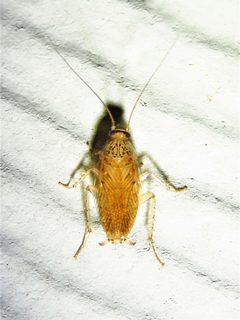
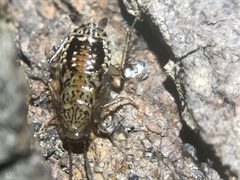
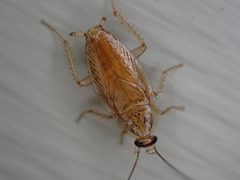
Distinguished from similar small by the combination of: pale yellow-brown coloration with spotted pronotum; tegmina not reaching apex (especially in males); and specific male genitalia—subgenital plate between styles three times as long as broad. C. l. minima differs from C. l. lutea by smaller average size, shorter tegmina, shorter male inner wings, and narrower male subgenital plate. Female C. l. lutea identified by large boat-shaped subgenital plate with rounded apex.
Images
Appearance
are pale brownish-yellow with a pale brown bearing a band between the and often dark brown spots on the . The pronotum disc displays several small brownish spots with transparent lateral edges. Tegmina are leathery, typically not reaching the apex; in males they are distinctly shorter than in females with rounded tips in females. Females are larger with much shorter wings: body length 7.0–9.5 mm versus male 5.8–8.1 mm; pronotum length 2.2–2.6 mm versus male 1.8–2.1 mm. First instar hatchlings measure under 2 mm from head to abdomen tip.
Habitat
Found in leaf, grass, and pine needle litter in forested . C. l. lutea occurs in diverse Florida plant including pine flatlands, disturbed areas, gopher burrows, and near human structures. C. l. minima inhabits hardwood hammocks, open pinelands, scrub, flatwoods, and coastal marshes including Spartina and sawgrass marshes, plus grasses behind beaches.
Distribution
C. l. lutea: coastal plains of southeastern USA (Alabama, Florida, Georgia, Louisiana, Mississippi, North Carolina, South Carolina, Texas, Virginia) and Cuba. C. l. minima: Cuba and peninsular Florida including the Keys.
Life Cycle
() has been suggested as possible for ensign wasp Hyptia floridana. First instar hatchlings measure under 2 mm.
Ecological Role
Decomposer in forest litter systems; contributes to nutrient cycling in pine flatlands, hammocks, and coastal marsh .
Human Relevance
Occasionally found near houses; not documented as a significant pest . Scientific interest due to divergence patterns suggesting possible speciation.
Similar Taxa
- Other small Ectobiidae/Pseudophyllodromiidae cockroachesSimilar size and general form, but distinguished by color pattern, wing proportions, and male genitalia structure.
More Details
Subspecies divergence
The broad overlap in distribution of the two in peninsular Florida, combined with consistent differences, has prompted suggestions that they may warrant recognition as distinct .
Etymology
named for the Carib people of the Caribbean; 'Blatta' refers to light-avoiding insects in Latin; 'lutea' means yellow.