
Parcoblatta caudelli
Hebard, 1917
Caudell's wood cockroach, Caudell's wood roach
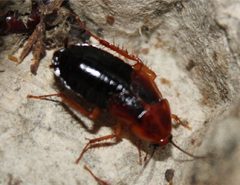
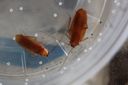
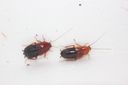
Parcoblatta caudelli is a small, pale-colored wood native to the eastern and central United States. Males exhibit distinctive clay-yellow and brownish-yellow coloration with fully developed tegmina. The occupies forested and has been recorded from sawmill refuse. Females were historically described as capable of , though subsequent observations have questioned this trait.
Pronunciation
How to pronounce Parcoblatta caudelli: //ˌpɑːrkoʊˈblætə kɔːˈdɛlaɪ//
These audio files are automatically generated. While they are not always 100% accurate, they are a good starting point.
Identification
Distinguished from by combination of small size (smallest pale brown Parcoblatta), male color pattern (clay-yellow and underside with brownish-yellow pronotum disc and abdominal dorsum), and modified resembling P. lata. Tegmina slightly wider than pronotum. Long, thin . Female capability historically cited as unique among U.S. Parcoblatta, but this character requires verification.
Images
Appearance
Male: Pale clay-yellow , underside, and legs. Back of , pronotum disc, occiput, and transverse facial bar are brownish-yellow. Tegmina fully developed, slightly wider than pronotum. Long, thin . Smallest of the pale brown Parcoblatta . Abdomen modified in a manner similar to the much larger P. lata. Female: Fully winged (per original description), though capability remains disputed.
Habitat
Forested areas. Documented from old sawdust piles at former sawmill sites. Associated with decaying wood and woody debris.
Distribution
United States: Arkansas, District of Columbia, Indiana, Mississippi, North Carolina, Texas, Virginia, South Carolina. but not established in Ontario, Canada.
Behavior
habits inferred from association with wood cockroaches found under boards and logs. One source reports females may be capable of , though this is disputed.
Ecological Role
Decomposer in forest . Prey for including Ampulex canaliculata (Ampulicidae), which specifically targets Parcoblatta .
Human Relevance
in Ontario, Canada, but not established. No documented pest status. Encountered in forested and formerly industrial sites such as abandoned sawmills.
Similar Taxa
- Parcoblatta lataShares modified structure; distinguished by much larger size and different coloration
- Other Parcoblatta speciesP. caudelli is smallest of pale brown ; male color pattern and abdominal modification are diagnostic
Misconceptions
Female capability: originally described as unique among U.S. Parcoblatta, but a 2003 North Carolina study characterized females as flightless. This discrepancy remains unresolved.
More Details
Taxonomic History
Described by Hebard in 1917. Lawson (1967) noted female capability as unique among U.S. Parcoblatta; McKittrick (1964) and subsequent authors may have followed this. A 2003 study of North Carolina specimens did not confirm flight in females.
Predator Relationship
Documented prey of Ampulex canaliculata, a cockroach wasp that paralyzes and caches Parcoblatta for larval development.