
Pycnoscelus
Scudder, 1862
burrowing cockroaches
Species Guides
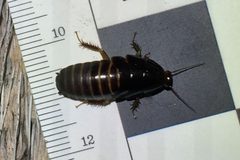
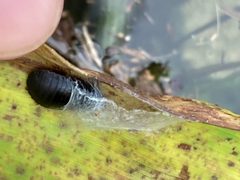
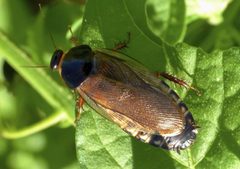
1- Pycnoscelus surinamensis(Surinam cockroach)
Pycnoscelus is a of burrowing in the Blaberidae, containing approximately 15 described . The genus is distributed across India, China, Southeast Asia, and has been introduced to other regions including the Americas. The most studied species, Pycnoscelus surinamensis (Surinam cockroach), is notable for being parthenogenetic and serving as an intermediate for poultry .
Pronunciation
How to pronounce Pycnoscelus: /pɪkˈnɒsɛləs/
These audio files are automatically generated. While they are not always 100% accurate, they are a good starting point.
Identification
Members of this are distinguished by their burrowing and association with soil or substrate . Specific identification to level requires examination of genitalia and other detailed morphological characters; the genus was taxonomically revised in 2024 with two new species described from China.
Images
Habitat
Burrowing requiring substrate for survival and . Pycnoscelus surinamensis shows substrate preference for cocopeat and vermiculite over leaf litter or bare conditions, with lowest survival rates in the absence of substrate.
Distribution
Native to India, China, and Southeast Asia (Malesia, Cambodia, Afghanistan). Pycnoscelus surinamensis has been introduced to the Americas and documented in Mexico.
Host Associations
- Oxyspirura mansoni - intermediate Pycnoscelus surinamensis serves as intermediate for this spirurid that causes ocular filariosis in poultry
Life Cycle
Pycnoscelus surinamensis has four nymphal instars and completes its lifecycle in approximately 135 days. involves false ovoviviparity: the female forms an and carries it internally for approximately 5 days before depositing it in a suitable location for external hatching.
Behavior
Burrowing with demonstrated substrate selectivity. Pycnoscelus surinamensis exhibits parthenogenetic with both and triploid documented.
Ecological Role
Intermediate for parasitic in poultry systems; facilitates transmission of Oxyspirura mansoni to chickens in backyard farming environments.
Human Relevance
Pycnoscelus surinamensis acts as a for Oxyspirura mansoni, a causing ocular filariosis in domestic poultry. The 's presence in free-range and backyard chicken operations poses a veterinary concern.
More Details
Reproductive biology
Pycnoscelus surinamensis is parthenogenetic with multiple clonal lineages. Both and triploid exist, descended from the sexual ancestor P. indicus. The term "false ovoviviparity" describes the internal retention of the for ~5 days before deposition, distinct from true ovoviviparity where embryos develop internally.
Desiccation tolerance
Desiccation in P. surinamensis nymphs is strongly associated with body size and varies considerably among . This variation reflects preserved genetic diversity from the sexual ancestor rather than selection during . Triploid clones do not show enhanced desiccation resistance compared to clones.
Sources and further reading
- BugGuide
- Wikipedia
- GBIF taxonomy match
- iNaturalist taxon
- NCBI Taxonomy
- Catalogue of Life
- Physiological basis of ovipositional behaviour in the false ovoviviparous cockroach, Pycnoscelus surinamensis (L.)
- Studies on Biology, Morphometrics and Substrate Preference of the Burrowing Cockroach <i>Pycnoscelus surinamensis</i> (L.)
- Identification of Oxyspirura mansoni (Spirurida: Thelaziidae) in a free-range hen (Gallus gallus domesticus) and its intermediate host, Surinam cockroach (Pycnoscelus surinamensis) in Monterrey, Nuevo Leon, Mexico
- The effect of life cycle stage and genotype on desiccation tolerance in the colonizing parthenogenetic cockroach Pycnoscelus surinamensis and its sexual ancestor P. indicus
- Taxonomic update of Pycnoscelus Scudder, 1862 (Blattodea, Blaberidae, Pycnoscelinae), with descriptions of two new species from China.