
Panchlora
Burmeister, 1838
Green Banana Cockroach
Species Guides
1- Panchlora nivea(Cuban cockroach)
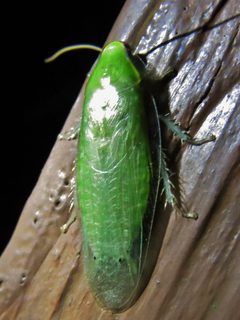
Panchlora is a of in the Blaberidae, Panchlorinae. Most are green in color, though some are cream or grey. The genus is distributed across the Americas and Africa. One species, Panchlora irrorata, has become established in banana trade and fruit markets.

Pronunciation
How to pronounce Panchlora: //pænˈklɔː.rə//
These audio files are automatically generated. While they are not always 100% accurate, they are a good starting point.
Identification
Most in this are green in color, distinguishing them from many other genera. Some species are cream or grey. Panchlora irrorata is specifically associated with banana bunches and fruit markets.
Images
Habitat
are found in the Americas and Africa. Panchlora irrorata has been established in banana trade, occurring on banana bunches and in fruit markets; and nymphs hide in leaf axils during the day.
Distribution
Americas; Africa; Mexico; Central America; Caribbean; Western South America; Southern South America. Panchlora irrorata specifically is on bananas (introduced/established in banana trade contexts).
Host Associations
- Musa (banana) - associated with banana bunches; established in banana tradeSpecific to Panchlora irrorata
Life Cycle
For Panchlora irrorata: development from to takes approximately 3 months at 27°C; contain 36-40 eggs; adults live 4-5 months.
Behavior
Panchlora irrorata is , hiding in leaf axils during the day. Not a significant pest of stored bananas.
Human Relevance
Panchlora irrorata has been used in educational contexts to demonstrate that most are harmless, particularly when nymphs mature into bright green .