
Haplocampa
Silvestri, 1912
two-pronged bristletails
Haplocampa is a of two-pronged bristletails (Diplura: Campodeidae) established by Silvestri in 1912. The genus contains at least five described , including four named by Silvestri in 1912 and 1933, and one described in 2019 from Vancouver Island, Canada. Species in this genus exhibit varying degrees of cave , with some showing only slight morphological modification for subterranean life. The genus demonstrates biogeographic connections across the North Pacific, with close affinities to Pacificampa (Japan/Korea), Metriocampa (Siberia), and Eumesocampa (North America), suggesting historical via the Bering Land Bridge.
Pronunciation
How to pronounce Haplocampa: /hæploʊˈkæmpə/
These audio files are automatically generated. While they are not always 100% accurate, they are a good starting point.
Identification
Distinguished from other campodeid by combination of generic-level morphological characters established by Silvestri (1912, 1933). Haplocampa wagnelli specifically identified by its relatively thick body and only slightly elongated and legs, contrasting with the highly elongated, slender form of strictly troglobitic campodeids. Close relationship to Pacificampa, Metriocampa, and Eumesocampa requires careful examination for definitive generic assignment.
Images
Appearance
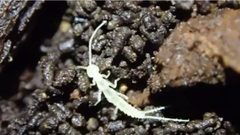
Campodeid diplurans with cylindrical, segmented bodies. and legs vary from moderately elongated to only slightly elongated depending on and degree of cave . Body thickness varies among species; some species retain relatively thick bodies rather than the slender form typical of strictly subterranean campodeids. Like all diplurans, possesses two tail-like (appendages) at the end. Coloration not specified in available sources.
Habitat
vary by and degree of . Haplocampa wagnelli found in limestone cave systems (Kiku Pot cave, Vancouver Island) but inferred to also inhabit soil habitats based on moderate morphological adaptation. Other species likely occur in soil, leaf litter, and cave environments. One of the most northerly cave-adapted dipluran species recorded at 49°N latitude.
Distribution
North America (Canada: Vancouver Island, British Columbia; United States). Historical records suggest broader distribution, with close relatives indicating past trans-Bering connections to Asia (Japan, Korea, Siberia).
Ecological Role
Member of soil and cave . As a campodeid dipluran, likely contributes to decomposition of organic matter in subterranean and soil .
Human Relevance
Subject of biogeographic research regarding post-glacial and survival of terrestrial arthropods in subterranean refugia. Haplocampa wagnelli discovery prompted discussion of whether diplurans survived the Last Glacial Maximum (26,500 years ago) beneath the Cordilleran Ice Sheet or colonized via post-glacial from Asia.
Similar Taxa
- PacificampaClose phylogenetic relationship; both share trans-Pacific distribution patterns and morphological affinities suggesting common ancestry via Bering Land Bridge
- MetriocampaSiberian with close affinities to Haplocampa, part of the same North Pacific dipluran biogeographic complex
- EumesocampaNorth American closely related to Haplocampa, demonstrating the genus-level connections across the Pacific
- Strictly troglobitic CampodeidaeHaplocampa , particularly H. wagnelli, differ in having only slight elongation of appendages and thicker bodies compared to highly modified cave-adapted campodeids with elongated, slender forms
More Details
Species list
Haplocampa chapmani Silvestri, 1933; Haplocampa drakei Silvestri, 1933; Haplocampa rugglesi Silvestri, 1933; Haplocampa wagnelli Sendra, 2019; Haplocampa wheeleri Silvestri, 1912
Glacial survival debate
The discovery of H. wagnelli in caves recently uncovered from beneath the Cordilleran Ice Sheet raises questions about whether the represents survival in deep subterranean refugia during the Last Glacial Maximum or post-glacial from Asia
Conservation context
Type locality for H. wagnelli (Kiku Pot cave) is located near Port Alberni, Vancouver Island, in a small limestone karst area vulnerable to surface disturbance