
Rhabdura
Cook, 1896
Family Guides
2- Campodeidae(slender entrophs)
- Procampodeidae
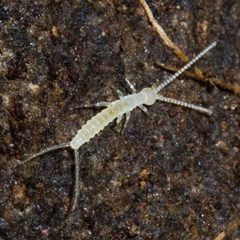
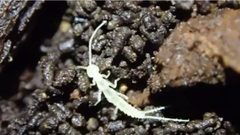
Rhabdura is a suborder of diplurans, commonly known as two-pronged bristletails, distinguished by the presence of two terminal appendages () that are pincer-like or forceps-shaped. The suborder encompasses approximately 290 described distributed across five . Rhabdura represents one of the two major lineages within Diplura, the other being Dicellura (four-pronged bristletails). Members of this group are small, wingless hexapods found primarily in soil and leaf litter .
Pronunciation
How to pronounce Rhabdura: /ræbˈdʊrə/
These audio files are automatically generated. While they are not always 100% accurate, they are a good starting point.
Identification
Rhabdura can be distinguished from the other dipluran suborder, Dicellura, by the presence of two rather than four. The cerci are typically well-developed, segmented, and often pincer-like or forceps-shaped. Body elongate and pale, generally lacking and pigment. long and multi-segmented. Unlike Dicellura, Rhabdura lack the additional pair of styli-like appendages (gill appendages) on abdominal segments.
Images
Habitat
Soil-dwelling organisms found in moist terrestrial environments including leaf litter, humus, and deeper soil horizons. Require high humidity and are sensitive to desiccation. Some members occupy caves and subterranean .
Distribution
distribution with records from all major continental landmasses. Individual show varying geographic ranges; Campodeidae is particularly widespread.
Ecological Role
Contributes to soil processes through detritivory and bioturbation. Part of the soil mesofauna that participates in nutrient cycling and organic matter decomposition.
Human Relevance
No direct economic or medical significance. Occasionally encountered in soil ecological studies and biodiversity assessments. Serve as bioindicators of soil health in some research contexts.
Similar Taxa
- DicelluraThe other suborder of Diplura, distinguished by having four terminal appendages (two plus two gill appendages) versus two in Rhabdura.
- Entognatha (other classes)Rhabdura may be confused with other hexapods such as Collembola or Protura, but differs in having two prominent and lacking the of Collembola or the appendages of Protura.
More Details
Taxonomic note
NCBI incorrectly lists Rhabdura at the rank of order; this appears to be a database error. The accepted classification places Rhabdura as a suborder within Diplura. GBIF also contains a doubtful -level record for 'Rhabdura Ogilby, 1907' which appears to be unrelated to the dipluran suborder.
Families
The suborder contains five in two superfamilies: Campodeoidea (Campodeidae, Procampodeidae) and Projapygoidea (, , ).