
Bourletiellidae
Börner, 1913
Genus Guides
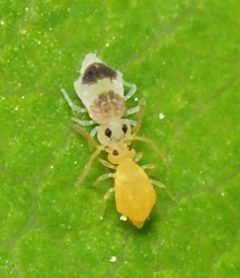
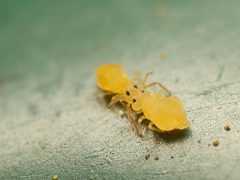
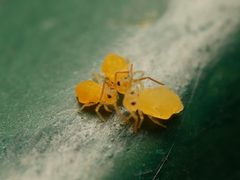
6is a of globular springtails (order Symphypleona) established by Börner in 1913. These collembolans possess the characteristic rounded, compact body form typical of their order. The family is in distribution with records spanning six continents including extreme environments such as Antarctica and the Antarctic Subantarctic region. The family contains multiple and is classified within the superfamily Sminthuroidea.
Pronunciation
How to pronounce Bourletiellidae: /bɔːrˌlɛtiˈɛlɪdiː/
These audio files are automatically generated. While they are not always 100% accurate, they are a good starting point.
Identification
Members of can be distinguished from other Symphypleona by the combination of a globular body shape and specific chaetotaxy patterns on the body. The family is placed in the Sminthuriformia infraorder, which separates it from the Katiannidae and other families in the Katianniformia. Detailed identification to family level requires examination of antennal segmentation, structure, and the arrangement of setae on the body surface. Specimens are typically small, generally under 3 mm in length.
Images
Distribution
distribution with confirmed records from: African Indian Desert, Amazon basin, Andean region, Antarctica and Subantarctic islands, Antillean region and southern Florida. The has been documented across six continents including tropical, temperate, and polar environments.
Similar Taxa
- SminthuridaeAlso in superfamily Sminthuroidea and infraorder Sminthuriformia; distinguished by differences in antennal structure and body chaetotaxy
- KatiannidaeSimilar globular body form but placed in infraorder Katianniformia; differs in antennal segmentation and
- DicyrtomidaeAnother Symphypleona with globular habitus; separated by differences in structure and the presence of specific body projections
More Details
Taxonomic Classification
The is classified within the superfamily Sminthuroidea and infraorder Sminthuriformia, one of two major lineages within the Symphypleona. The classification has been stable since Börner's 1913 establishment of the family, though the constituent have been revised over time.
Research Activity
The has 9,305 observations on iNaturalist as of the data cutoff, indicating moderate levels of citizen science documentation. However, detailed biological studies remain limited for many within the family.