
Polykatianna
J.T. Salmon, 1946
Species Guides
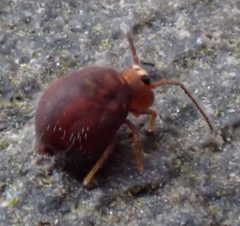
3Polykatianna is a of globular springtails in the Katiannidae, characterized by their rounded body form typical of the Symphypleona. The genus was established by J.T. Salmon in 1946 and contains distributed across widely separated regions including Australia, Antarctica and subantarctic islands, the Caribbean, and East Africa. Members of this genus inhabit diverse terrestrial environments from arid central Australian landscapes to cold subantarctic .
Pronunciation
How to pronounce Polykatianna: //ˌpɒliˌkætiˈænə//
These audio files are automatically generated. While they are not always 100% accurate, they are a good starting point.
Identification
Members of Polykatianna can be distinguished from other Katiannidae by features of the and body chaetotaxy (bristle arrangement), though specific diagnostic characters require microscopic examination. As Symphypleona, they possess the globular body form with the and first abdominal segments into a single structure, separating them from elongate Entomobryomorpha springtails. Differentiation from the related Katianna requires examination of antennal segment proportions and the structure of the (springing organ).
Images
Habitat
in this occupy varied terrestrial microhabitats including soil, leaf litter, and moss in regions ranging from arid central Australia to subantarctic islands. The genus shows ecological flexibility, with established in both temperate and cold environments.
Distribution
Antarctica and subantarctic islands; Australia (northern and eastern regions, central arid zone); Caribbean mainland; East African steppe regions.
Ecological Role
As soil-dwelling microarthropods, members of this contribute to decomposition processes and nutrient cycling in their respective . Their presence across diverse climatic zones suggests functional importance in both temperate and cold soil .
Similar Taxa
- KatiannaBoth belong to Katiannidae and share globular body form; Polykatianna is distinguished by antennal proportions and structure.
- SminthuridaeSimilar globular body form in Symphypleona, but Sminthuridae lack the specific antennal and chaetotaxy characters of Katiannidae.