
Sensillanura
Deharveng, 1981
Species Guides
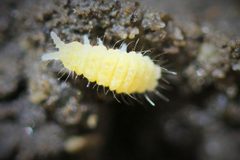
2Sensillanura is a of springtails (Collembola: Neanuridae) established by Deharveng in 1981. The genus is characterized by specific arrangements of on the body, a diagnostic feature for the group. Recent taxonomic work has described six new from the Southern Appalachian Mountains, expanding the known diversity of the genus in North America. Species identification relies heavily on detailed examination of chaetotaxy and sensory structures.
Pronunciation
How to pronounce Sensillanura: //sɛnˌsɪləˈnjʊrə//
These audio files are automatically generated. While they are not always 100% accurate, they are a good starting point.
Identification
Distinguished from other Neanuridae by characteristic arrangements of on the body, particularly on the and tergites. Generic requires examination of external morphological characters including chaetotaxy patterns. -level identification relies on detailed analysis of 137+ morphological characters including sensillar distribution, setal patterns, and body proportions. An identification key for all species in the has been published.
Images
Distribution
Southern Appalachian Mountains of North America (North Carolina, Tennessee, Virginia), including Great Smoky Mountains National Park; also recorded from Caribbean mainland, Europe, Mediterranean region, and Pacific North America.
Similar Taxa
- Other Neanurini generaShares tribe Neanurini and requires detailed sensillar and chaetotaxy analysis for differentiation; Sensillanura is distinguished by specific arrangements diagnostic at the generic level.
More Details
Taxonomic history
The was established in 1981 by Deharveng. A 2024 revision added six new from the Southern Appalachians (S. snideri, S. marimutti, S. sotoadamesi, S. giribeti, S. subiasi, S. boneti) and provided an updated generic based on cladistic analysis of 137 morphological characters across 30 species.
Phylogenetic significance
Cladistic analysis of the tribe Sensillanurini has been attempted to resolve relationships within the group, though the provided source does not detail specific phylogenetic conclusions beyond the analytical framework.