
Neelus
Folsom, 1896
Species Guides
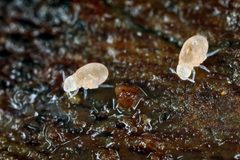
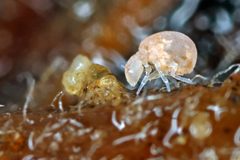
1Neelus is a of springtails (Collembola) in the Neelidae, established by Folsom in 1896. The genus contains both surface-dwelling and troglobiotic (cave-restricted) . Several species exhibit troglomorphic adaptations including elongated unguis (claws), larger body size, and elongated antennal . The genus has a broad geographic distribution spanning Europe, North America, and Asia, with notable cave-dwelling diversity in the Balkans.
Pronunciation
How to pronounce Neelus: /ˈneː.lus/
These audio files are automatically generated. While they are not always 100% accurate, they are a good starting point.
Identification
-level identification within Neelus requires examination of chaetotaxy patterns on and legs. Troglobiotic species (N. koseli, N. klisurensis, N. lackovici) can be distinguished by troglomorphic features: elongated unguis, larger body size, and elongated on antennal segment IV. Surface-dwelling species lack these cave adaptations. Comparative tables and dichotomous keys are available in taxonomic revisions.
Images
Habitat
varies by : some occupy surface environments in soil and leaf litter, while others are strictly troglobiotic, restricted to deep cave systems. Troglobiotic species have been documented from caves in eastern Slovakia, Serbia (Kosovo), and Croatia. Surface-dwelling species occur in Europe and North America.
Distribution
Europe (including Balkan caves), North America, and Asia (Himalayan region of Sikkim, India). GBIF records indicate additional occurrences in the Andes, Caribbean, Central Australia, and continental Southeast Asia.
Similar Taxa
- Other Neelidae generaNeelus is distinguished within Neelidae by specific chaetotaxy patterns and, in troglobiotic , by the combination of elongated unguis, larger body, and elongated antennal not shared by other in the .
More Details
Troglobiotic diversity
The shows significant troglobiotic radiation in the Dinarides region of the Balkans, with multiple cave-restricted described from Croatia, Serbia, and Slovakia. These represent independent events of subterranean .
Taxonomic resources
Comprehensive identification keys and comparative tables for all known were published in Zootaxa revisions (2010, 2016), providing diagnostic characters for species-level determination.
Sources and further reading
- BugGuide
- Wikipedia
- GBIF taxonomy match
- iNaturalist taxon
- NCBI Taxonomy
- Catalogue of Life
- A New Species of Genus Neelus Folsom, 1896 (Collembola: Neelidae) from Himalayan Region of Sikkim, India
- Genus Neelus Folsom, 1896 (Hexapoda, Collembola) reveals its diversity in cave habitats: two new species from Croatia
- Revision of the genus Neelus Folsom, 1896 (Collembola, Neelida) with the description of two new troglobiotic species from Europe