
Parisotoma
Bagnall, 1940
Species Guides
1- Parisotoma notabilis(elongate-bodied springtail)
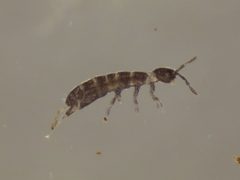
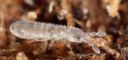
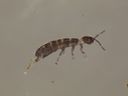
Parisotoma is a of elongate-bodied springtails in the Isotomidae, comprising approximately 11 described . The genus is notable for containing Parisotoma notabilis, one of the most abundant and widely studied springtails in temperate regions of the northern hemisphere. This exhibits extensive cryptic genetic diversity, with at least six distinct lineages that show differential distribution patterns and associations. Parisotoma species are eurytopic soil microarthropods used in biological monitoring and ecological research.
Pronunciation
How to pronounce Parisotoma: /ˌpæ.rɪˈsoʊ.tə.mə/
These audio files are automatically generated. While they are not always 100% accurate, they are a good starting point.
Identification
Elongate body form distinguishes Parisotoma from more globular springtail . -level identification within the genus requires microscopic examination of setae patterns, chaetotaxy, and antennal segmentation. Parisotoma notabilis is morphologically uniform across its range despite containing multiple cryptic genetic lineages; molecular analysis (COI, histone H3, 28S) is necessary to distinguish lineages. The genus is distinguished from other Isotomidae by the combination of elongate body and specific antennal and setal characteristics described in original species .
Images
Habitat
Soil-dwelling in temperate regions; occurs across diverse including natural forests, forest parks, urban lawns, and anthropogenic soils. Eurytopic with for disturbed . Genetic lineages show differential habitat association: L2, L4-Hebert, and L0 dominate least disturbed habitats; L1 predominates in urban environments.
Distribution
in temperate regions of the northern hemisphere, particularly the Western Palearctic. Six genetic lineages of P. notabilis show complex distribution: L1 widespread in southern and eastern Europe; L2 in western and northern Europe; L4-Hebert recorded from Canada, Estonia, and widespread across the East European Plain. Sympatry of multiple lineages occurs in approximately half of surveyed locations on the East European Plain and across much of European Russia. GBIF records indicate presence across Amazon, Andean, Antarctic & Subantarctic, Arctic & Sub-arctic, and Ascension & St. Helena regions for the .
Behavior
Parthenogenetic is predominant across the range of P. notabilis, facilitating rapid of disturbed . Males occur sporadically but the parthenogenetic form is ubiquitous. Shows documented resistance to , heavy metals, various fertilizers, and moderate trampling. Among the first colonizers of disturbed habitats due to reproductive mode. Genetic lineages demonstrate differential responses to urbanization gradients.
Ecological Role
component of Collembola in temperate soils; abundant soil microarthropod contributing to decomposition and nutrient cycling. Used as bioindicator for soil pollution and soil quality assessment. Genetic lineage composition serves as indicator of disturbance level, with potential for monitoring changes in zones of sympatry.
Human Relevance
Used as model organism in studies of soil microarthropod genetics and ecological genetics. Serves as bioindicator for soil health, pollution, and urbanization effects. The cryptic provides a system for studying to anthropogenic environments and dynamics.
Similar Taxa
- IsotomaAlso elongate-bodied Isotomidae; Parisotoma distinguished by specific antennal and setal characteristics in original
- FolsomiaSimilar elongate form in same ; differentiation requires examination of chaetotaxy and body proportions
Sources and further reading
- BugGuide
- Wikipedia
- GBIF taxonomy match
- iNaturalist taxon
- NCBI Taxonomy
- Catalogue of Life
- Distribution of Genetic Lineages of Parisotoma notabilis (Collembola) in the Urbanistic Gradient
- Distribution of Genetic Lineages of Parisotoma notabilis (Collembola) in the Urbanistic Gradient
- Sympatry of genetic lineages of Parisotoma notabilis s. l. (Collembola, Isotomidae) in the East European Plain
- Genetic structure and distribution of Parisotoma notabilis (Collembola) in Europe: Cryptic diversity, split of lineages and colonization patterns
- Ecophysiological adaptations of genetic lineages of Parisotoma notabilis (Schäffer, 1896) (Hexapoda: Collembola): the role of genetic polymorphism in colonization of disturbed habitats
- Genetic lineages of <i>Parisotoma notabilis</i> sensu lato (Hexapoda, Collembola) and their use in biological monitoring