
Lepidocyrtus paradoxus
Uzel, 1890
slender springtail
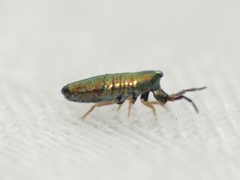
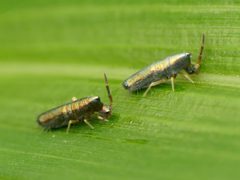
Lepidocyrtus paradoxus is a of slender springtail in the Entomobryidae, first described by Uzel in 1890. It is one of the most frequently observed species in Europe, with over 1,900 documented observations on iNaturalist. The species belongs to a characterized by distinctive patterns and body typical of entomobryid springtails.
Pronunciation
How to pronounce Lepidocyrtus paradoxus: //ˌlɛpɪdoʊˈsɪrtəs pærəˈdɒksəs//
These audio files are automatically generated. While they are not always 100% accurate, they are a good starting point.
Identification
Distinguished from other Lepidocyrtus by specific morphological features of the body , chaetotaxy (bristle arrangement), and antennal structure. Precise identification requires examination of microscopic characters including the pattern of scales, details of the dentes and mucro, and the structure of the postantennal organ. Separation from congeneric species such as L. cyaneus and L. curvicollis relies on subtle differences in these features best assessed through slide-mounted specimens.
Images
Appearance
Slender-bodied with the characteristic elongate form typical of the Lepidocyrtus. Members of this genus possess distinctive body that contribute to their coloration and pattern. The (springing organ) is well-developed, enabling the characteristic jumping locomotion of springtails. Body size is small, consistent with the minute dimensions typical of Collembola.
Habitat
Found in diverse terrestrial microhabitats including leaf litter, soil surface, decaying wood, and moss layers. Occurs in both natural and semi-urban environments where moisture and organic matter accumulate. The shows adaptability to various substrate types within the soil-litter interface zone.
Distribution
Documented from multiple European countries including Belgium (including Flemish Region), Sweden (where it has been recorded as absent in some surveys), and the Portuguese archipelagos of Madeira and Porto Santo. The core range appears to be western and central Europe, with insular on Atlantic islands.
Human Relevance
Frequently recorded in citizen science observations, contributing to documentation of diversity and distribution patterns. No known economic or agricultural significance.
Similar Taxa
- Lepidocyrtus cyaneusOverlapping European distribution and similar slender body form; distinguished by differences in coloration and antennal structure
- Lepidocyrtus curvicollisShared preferences and general ; requires microscopic examination of chaetotaxy and details for reliable separation
- Other Entomobryidae genera (e.g., Entomobrya, Orchesella)Similar body plan and jumping locomotion; Lepidocyrtus distinguished by presence of characteristic body and specific antennal segmentation
More Details
Taxonomic history
Described by Czech entomologist Josef Uzel in 1890, a prominent early researcher of Collembola. The specific epithet 'paradoxus' may refer to unusual or unexpected morphological features noted at the time of description.
Observation frequency
With over 1,900 iNaturalist observations, this is among the most frequently documented European , likely reflecting both genuine abundance and relative ease of identification compared to more cryptic .