Squilla
mantis shrimp, spearer mantis shrimp
Species Guides
1- Squilla empusa(West Atlantic Mantis Shrimp)
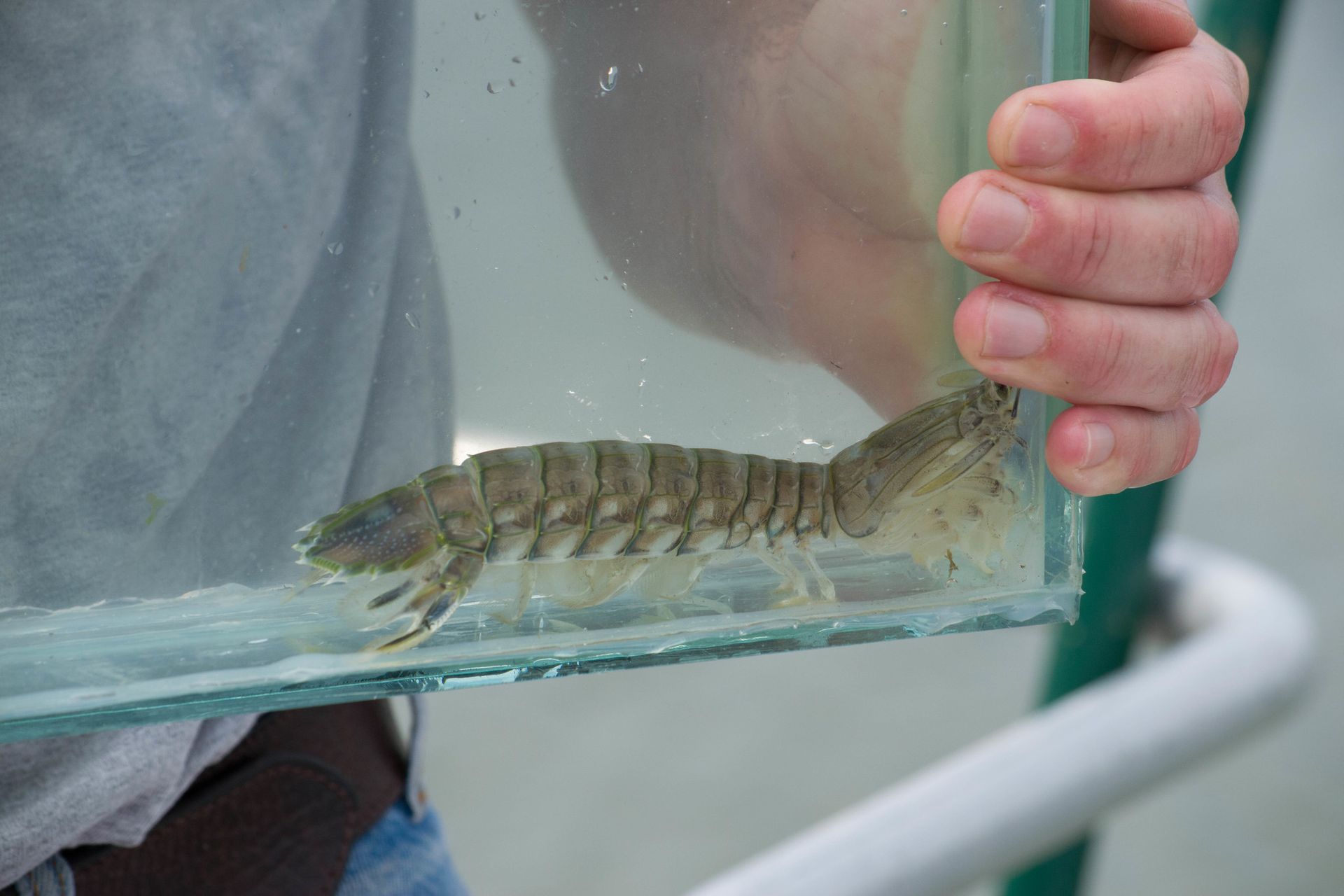
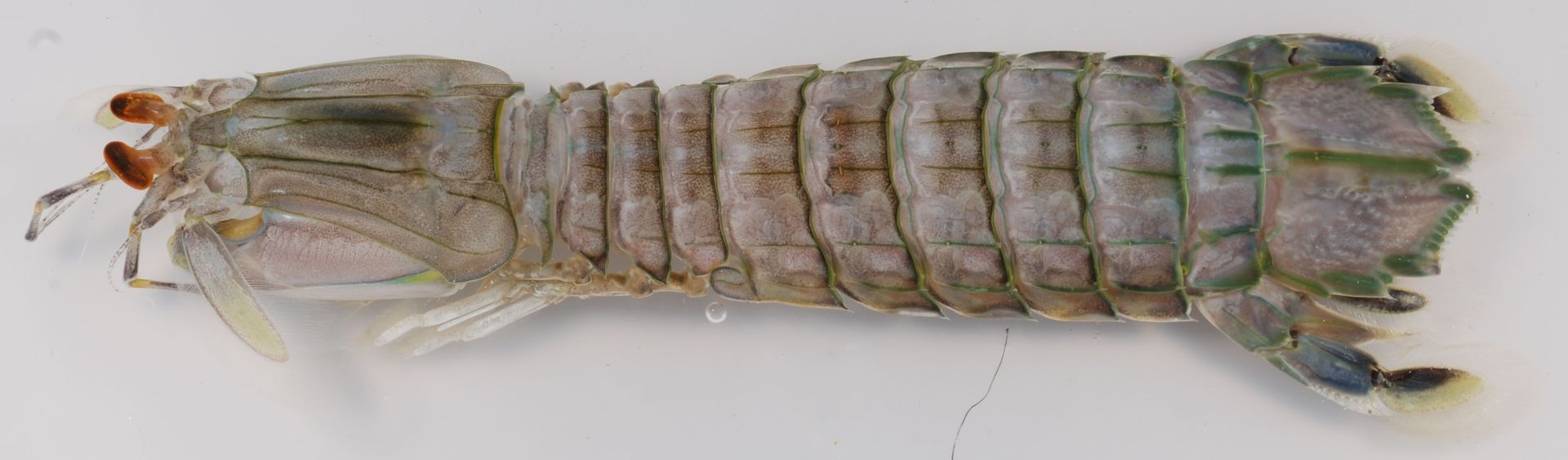
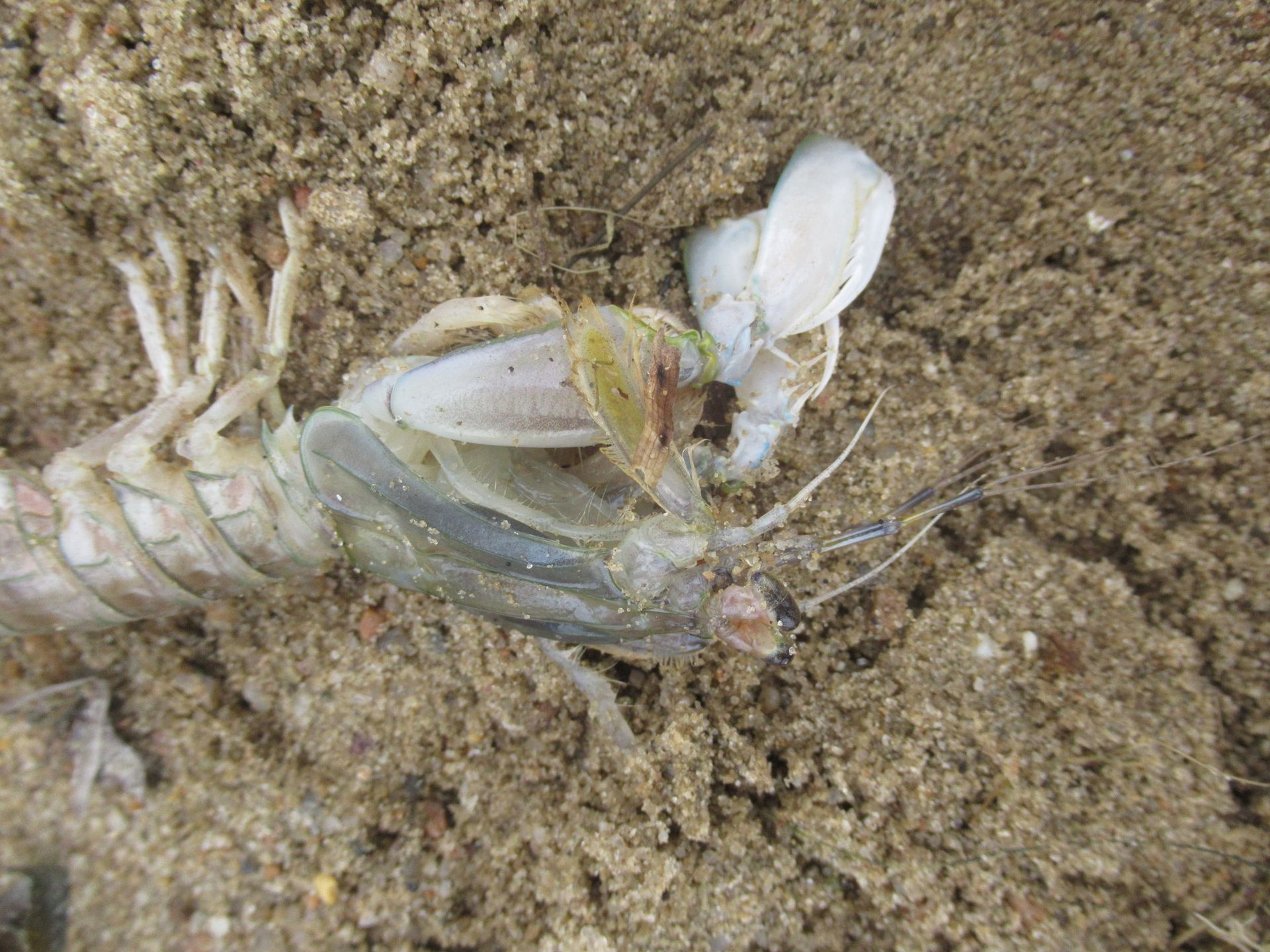
Squilla is a of stomatopod crustaceans commonly known as mantis shrimp or spearer mantis shrimp. Members of this genus are small marine , typically 40–70 mm in length, characterized by appendages adapted for spearing soft-bodied prey rather than smashing hard shells. The genus has a fossil record dating to 145 million years ago and has diversified into over a dozen extant . Squilla species are distributed in tropical and subtropical marine waters worldwide, including the Indian Ocean and Mediterranean Sea.
Pronunciation
How to pronounce Squilla: /ˈskwɪlə/
These audio files are automatically generated. While they are not always 100% accurate, they are a good starting point.
Identification
Distinguished from other stomatopod by: (1) claw with exactly six teeth of intermediate size, not adapted for smashing; (2) absence of raised carina on , or its extension across entire surface; (3) tail plate with four to six distinct spines rather than structure; (4) shorter antennular peduncles. The combination of spearing-type raptorial appendage and carina condition separates Squilla from both smashers (e.g., Odontodactylus) and other spearer genera.
Images
Habitat
Marine benthic environments in tropical and subtropical climates. Inhabits soft sediments where individuals construct burrows in sand or muddy substrates. Found in shallow coastal waters; depth distribution varies by with some occurring in deeper waters of the Gulf of Mexico.
Distribution
Circumglobal in tropical and subtropical waters. Documented from the Indian Ocean, Mediterranean Sea, Eastern Atlantic, and Gulf of Mexico. The has a fossil record extending to 145 million years ago.
Seasonality
Reproductive season begins in spring. Females progress from maturation to ripe stage in winter and become spent in summer. In autumn, females leave burrows and become more vulnerable to capture. Fisheries catch more males in spring and summer when females remain in galleries tending .
Diet
Soft-bodied prey including worms, krill, and small fish. Cannot consume hard-shelled prey due to lack of smashing appendage. Intraspecific on other Squilla has been observed.
Life Cycle
Five maturity stages: , early maturation, maturation, ripe, and spent. Maximum lifespan approximately 18 months. : individuals die shortly after . Female reproductive condition assessed by ovarian mass relative to total body mass.
Behavior
Predatory benthic burrower. Constructs holes in sediment, remains hidden, and ambushes soft-bodied prey using claws. Male-male agonistic interactions involving physical contact are common; males exhibit more aggressive than females. Female-female and female-male interactions tend to be passive and non-striking. Burrowing activity functions as engineering, scattering organic and inorganic particles across the seafloor.
Ecological Role
Benthic that regulates of soft-bodied and small fish. Bio-diffuser through burrowing activity that modifies sediment structure and nutrient distribution. Prey for larger marine predators; captured as bycatch in fisheries.
Human Relevance
No significant value as human food or fish meal due to small size. Captured primarily as bycatch in fisheries targeting other . are a source of and chitosan, which are extracted through chemical processing (demineralization, decolorization, deproteinization, deacetylation). Chitosan derived from Squilla has demonstrated potential biomedical applications including reduction of blood plasma HDL levels, antimicrobial activity against Candida yeast, and possible antifungal and anticancer properties.
Similar Taxa
- OdontodactylusDistinguished by possession of hardened smashing appendages capable of breaking shells, and superior visual acuity with ability to perceive more colors than humans; Squilla has spearing appendages and simpler nauplius .
- Other stomatopod generaSquilla is separated by the combination of six-toothed claw, carina condition, and non- tail plate with four to six spines.
More Details
Longevity
The has persisted for over 100 million years, indicating successful of the spearing predatory strategy despite inability to process hard-shelled prey.
Vision
The nauplius with three to four ocelli provides limited visual capability—likely only light direction detection—representing reduced visual complexity compared to some other stomatopod .
Sources and further reading
- BugGuide
- Wikipedia
- iNaturalist taxon
- NCBI Taxonomy
- Catalogue of Life
- Notes on Leander squilla L.
- The complete mitochondrial genome of the stomatopod crustacean Squilla mantis
- Intraspecific agonistic interactions of squilla empusa (crustacea: stomatopoda)
- Electrophysiological Investigations of the Heart of Squilla Mantis
- Abundance and Distribution of Two Species of Squilla (Crustacea: Stomatopoda: Squillidae) in the Northern Gulf of Mexico
- Biotic and abiotic factors determining the distribution of two prawn species: Palaemon adspersus and P. squilla
- Density and depth distribution of the sympatric species <I>Squilla chydaea</I> and <I>Squilla empusa</I> (Stomatopoda: Squillidae) in the southern Gulf of Mexico