
Proporcellio
Verhoeff, 1907
Species Guides
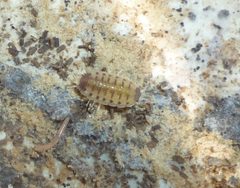
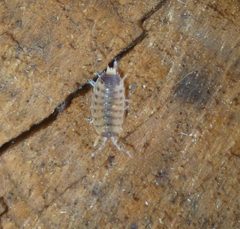
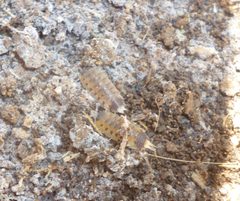
1Proporcellio is a of terrestrial isopods in the Porcellionidae, described by Verhoeff in 1907. in this genus are found primarily in the Mediterranean region and surrounding areas. As members of the suborder Oniscidea, they are fully terrestrial crustaceans adapted to life on land. The genus is distinguished from related porcellionid genera by specific morphological features of the pleon and uropods.
Pronunciation
How to pronounce Proporcellio: //proʊˈpɔːr.sɛl.i.oʊ//
These audio files are automatically generated. While they are not always 100% accurate, they are a good starting point.
Identification
Proporcellio can be distinguished from the closely related Porcellio by characteristics of the pleon and uropod . The genus typically exhibits a more elongated body form compared to some other Porcellionidae. Specific identification to species level requires examination of male genitalia and detailed pleopod structure. Differentiation from Armadillidium ( Armadillidiidae) is straightforward as Proporcellio cannot conglobate (roll into a ball).
Images
Habitat
of Proporcellio inhabit Mediterranean-type climates, occurring in rocky, calcareous, or karstic landscapes. They are found in leaf litter, under stones, and in soil crevices in dry to mesic terrestrial environments. Some species show preference for limestone substrates.
Distribution
The is distributed across the Mediterranean Basin, with records from southern Europe (Italy, Greece, Balkans), North Africa, and the Middle East. Several are to restricted karst regions or islands.
Ecological Role
As , Proporcellio contribute to decomposition of plant matter and nutrient cycling in Mediterranean terrestrial . They serve as prey for various and vertebrate in these .
Similar Taxa
- PorcellioSimilar (Porcellionidae) and general body plan; distinguished by pleon and uropod , with Proporcellio showing more elongated proportions
- ArmadillidiumOverlapping distribution and ; easily distinguished as Armadillidium can conglobate (roll into ball) while Proporcellio cannot
More Details
Taxonomic History
The was established by German zoologist Karl Wilhelm Verhoeff in 1907 to accommodate previously placed in Porcellio that showed distinct morphological characteristics. The genus has undergone several revisions, with species boundaries still being refined in some groups.