
Platyarthrus
Brandt, 1833
Species Guides
2- Platyarthrus aiasensis
- Platyarthrus hoffmannseggii(Ant Woodlouse)
Platyarthrus is a of small, blind woodlice comprising over 30 described . Members are obligate myrmecophiles, living almost exclusively within nests. The genus exhibits female-biased sex ratios in small . Body size in at least some species is dependent on ant species.
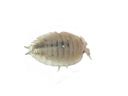
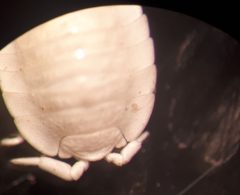
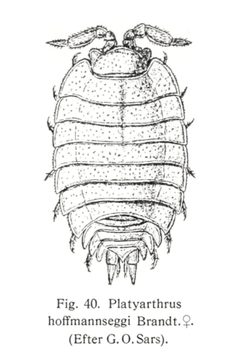
Pronunciation
How to pronounce Platyarthrus: /ˌplæt.iˈɑr.θrəs/
These audio files are automatically generated. While they are not always 100% accurate, they are a good starting point.
Images
Habitat
nests; semi-arid to arid bioclimatic regions in some
Distribution
Palearctic region including Tunisia, Hungary, and Scandinavia (Denmark, Norway, Sweden)
Host Associations
- ants - myrmecophileobligate association; lives almost solely in nests
- Lasius flavus - specific for P. hoffmannseggi in studied
- seven ant species - recorded for P. monastirensis; not specified
Life Cycle
Two distinct size/age classes observed in , suggesting overlapping
Behavior
Movement among colonies appears extremely limited; individuals show reduced in foreign colonies
Ecological Role
Nutritionally linked to ants; specific role within nests not fully characterized
More Details
Sex Ratio Dynamics
Female-biased sex ratios are common in small, isolated . Female-biased populations tend to produce relatively more females and fewer males in subsequent compared to populations with balanced sex ratios. No correlation exists between degree of female and population growth rate.
Host-Dependent Morphology
Body size in P. hoffmannseggii varies depending on , indicating plasticity in response to different host environments.
Sources and further reading
- BugGuide
- Wikipedia
- GBIF taxonomy match
- iNaturalist taxon
- NCBI Taxonomy
- Catalogue of Life
- Body size in the ant-associated isopod Platyarthrus hoffmannseggii is host-dependent
- Occurrence of Platyarthrus schoblii (Isopoda, Oniscidea) and its ant hosts in Hungary
- A new species of Platyarthrus Brandt, 1833 from Tunisia: Morphological description, geographical distribution and ecological remarks
- Population size and growth rate, sex ratio and behaviour in the ant isopod, Platyarthrus hoffmannseggi