Platyarthridae
Verhoeff, 1949
Platyarthrid Woodlice
Genus Guides
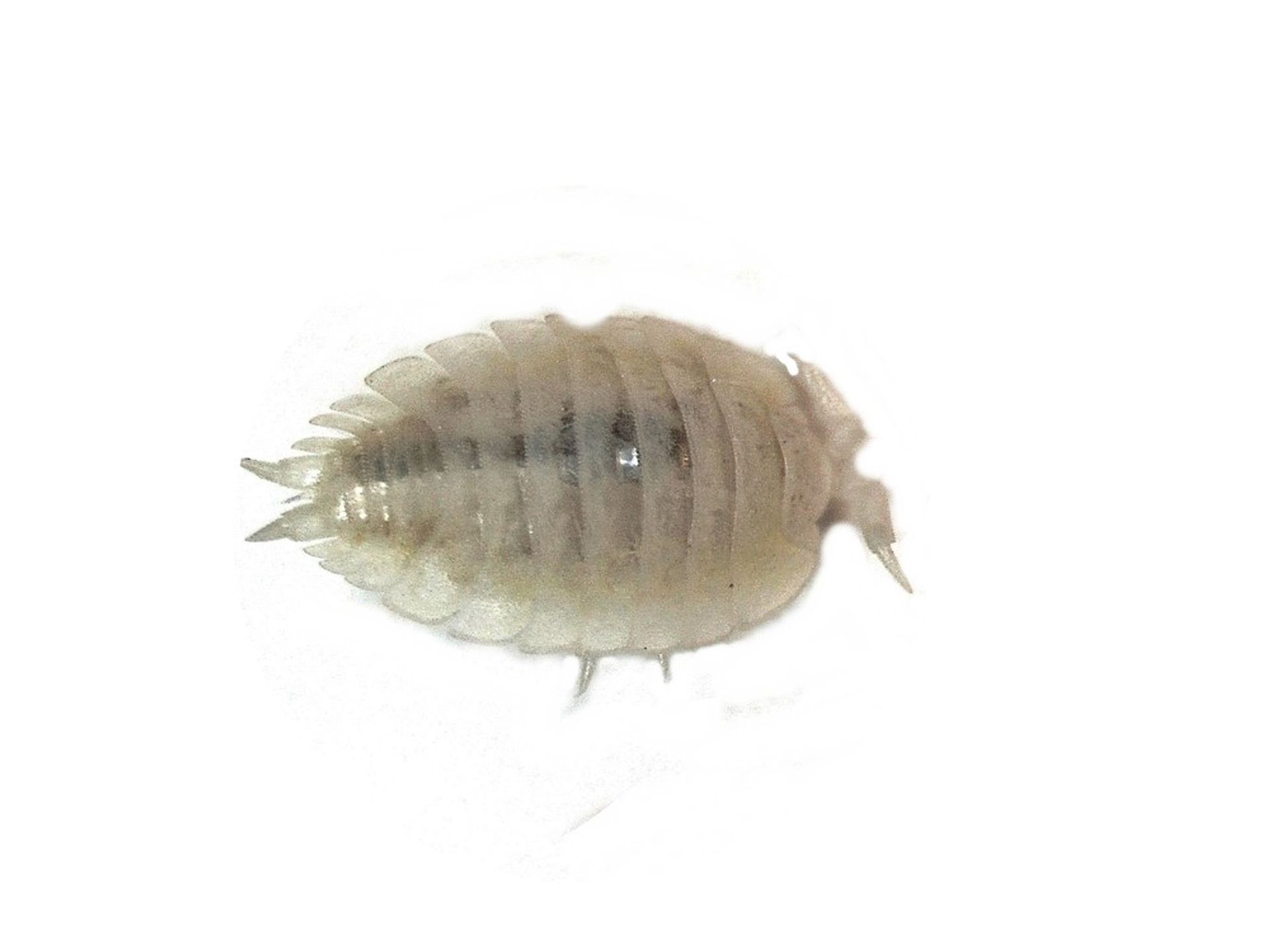
2Platyarthridae is a of small terrestrial isopods (woodlice) established by Verhoeff in 1949. Members are typically less than 6 mm in length, lack the ability to conglobate (roll into a ball), and possess reduced with fewer than 10 . The family is distinguished from similar woodlice by the absence of pleopodal lungs. Platyarthridae contains approximately 130 across nine , including Cephaloniscus, Echinochaetus, Gerufa, Lanceochaetus, Manibia, Niambia, Papuasoniscus, Platyarthrus, and Trichorhina. The family has a predominantly tropical distribution and includes numerous cave-dwelling species.

Pronunciation
How to pronounce Platyarthridae: //ˌplæt.iˈɑːr.θrɪˌdiː//
These audio files are automatically generated. While they are not always 100% accurate, they are a good starting point.
Identification
Distinguished from Trachelipodidae and other woodlice by the absence of pleopodal lungs. Small size (<6 mm), very small with <10 , and inability to conglobate are key field characteristics. Within the family, Trichorhina are identified by combinations of texture (granulate vs. smooth), arrangement of -setae, noduli laterales position, pereonite corner shape, pleon retraction, shape, and male pleopod I . Molecular data (COI sequences) increasingly used for species delimitation, particularly for cryptic cave-dwelling forms.
Images
Appearance
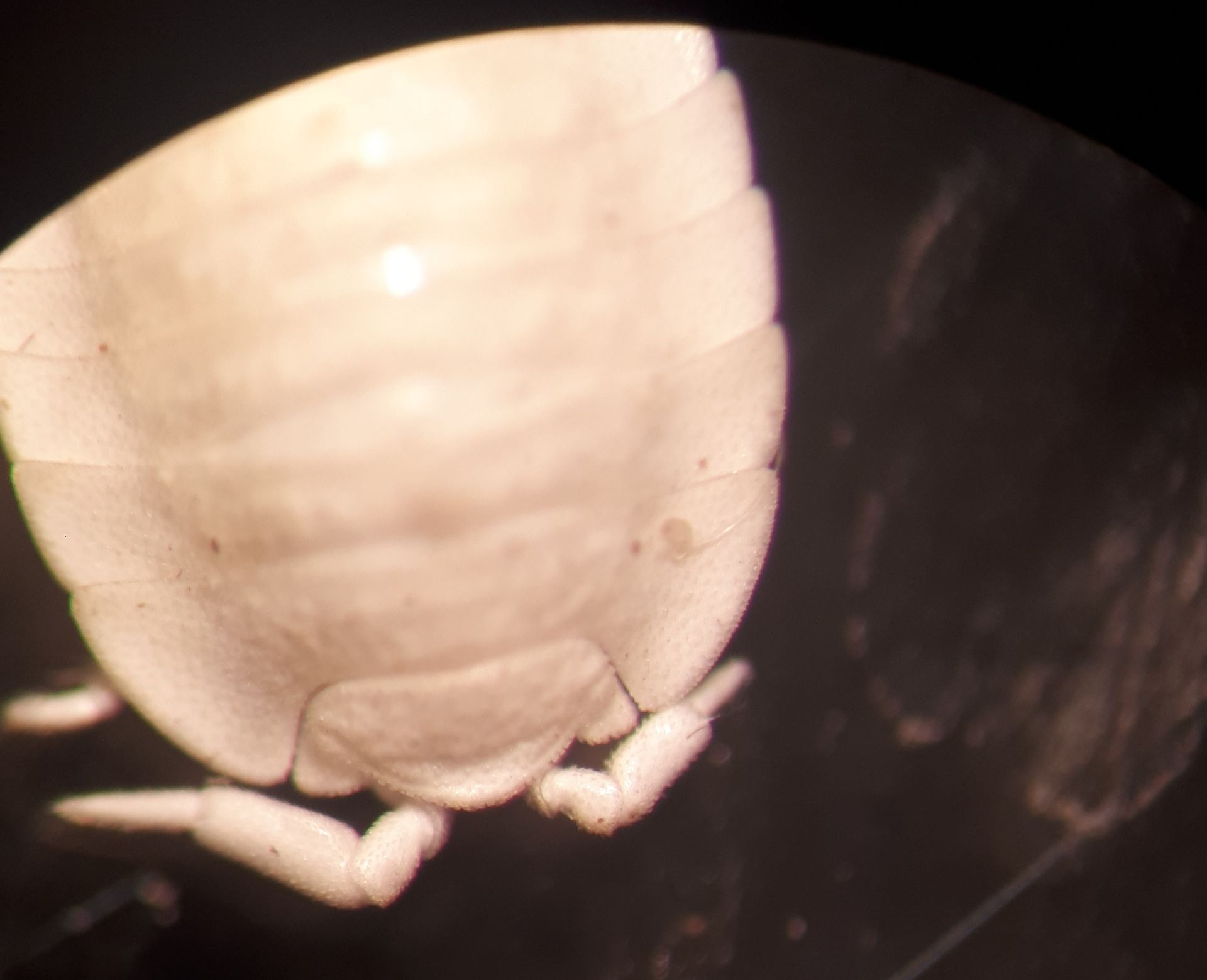
Small woodlice, mostly less than 6 mm in length. Body dorsoventrally flattened, unable to roll into a ball (non-conglobating). very small, with fewer than 10 . No pleopodal lungs present. texture variable: some with granulations arranged in longitudinal lines, others with smooth surfaces. -setae often present, sometimes arranged in longitudinal lines. Noduli laterales (lateral sensory organs) present, with positions varying among species. Cephalon () typically not inserted into pereon (). Pereonites with corners ranging from convex to weakly sinuous. Pleon () not retracted in relation to pereon. shape variable: triangular with obtuse or rounded tip, or sub-triangular with widely rounded posterior edge. Neopleura (lateral pleonal extensions) may be large and falciform in some species.
Habitat
Predominantly tropical , with many restricted to subterranean environments. Cave-dwelling species documented in limestone karst systems, iron ore caves, and groundwater calcretes. Surface-dwelling species occur in tropical forest litter and soil. Brazilian records include Atlantic Forest caves, Alto Ribeira karst area, and iron ore cave systems in the Amazon (Serra dos Carajás, Serra Leste, Serra da Bocaina, Serra do Tarzan, Serra Norte, Serra Sul). Ibero-Balearic occur in epigean (surface) habitats.
Distribution
Primarily tropical distribution. Documented from: Brazil (Bahia, Mato Grosso, Mato Grosso do Sul, Minas Gerais, Pará, São Paulo states), Amazon region iron ore cave systems, Iberian Peninsula and Balearic Islands (Spain, Portugal), Western Australia (Yilgarn region), Queensland (Australia), and various tropical regions globally. Scandinavian records (Denmark, Norway, Sweden) present in GBIF but may represent introductions or misidentifications requiring verification.
Behavior
Cave-dwelling documented in numerous , particularly in the Trichorhina. Subterranean show troglomorphic traits including reduced and elongated appendages in some lineages. No conglobation behavior—members cannot roll into defensive balls.
Similar Taxa
- TrachelipodidaeSimilar body form and size, but distinguished by presence of pleopodal lungs (often inconspicuous) versus complete absence in Platyarthridae
- ParaplatyarthridaeFormerly confused with Platyarthridae; now recognized as distinct based on morphological and molecular evidence. Australian previously assigned to Trichorhina (Platyarthridae) reassigned to Paraplatyarthrus (Paraplatyarthridae)
More Details
Taxonomic Status
considered based on current phylogenetic understanding, with ongoing revisions to generic boundaries. The Paraplatyarthrus formerly included in Platyarthridae, now placed in separate family Paraplatyarthridae.
Cave Radiation
Trichorhina shows extensive diversification in Brazilian cave systems, with 11 new described from caves in 2023 alone, indicating high cryptic diversity in subterranean .
Ecomorphological Studies
Statistical morphological analyses applied to distinguish epigean and hypogean (cave) , demonstrating measurable phenotypic divergence associated with subterranean .
Sources and further reading
- BugGuide
- Wikipedia
- GBIF taxonomy match
- iNaturalist taxon
- NCBI Taxonomy
- Catalogue of Life
- Everything is similar, everything is different! Trichorhina (Oniscidea, Platyarthridae) from Brazilian caves, with descriptions of 11 new species
- The genus Trichorhina Budde-Lund, 1908 (Crustacea, Isopoda, Platyarthridae) in the Ibero-Balearic region, with descriptions of three new species
- Investigating Patterns in New Species of Trichorhina Budde-Lund, 1908 Species (Isopoda: Platyarthridae) from Iron Ore Amazon Caves: Taxonomy and Insights into Their Ecomorphology
- Taxonomy of Paraplatyarthrus Javidkar and King (Isopoda: Oniscidea: <br />Paraplatyarthridae) with description of five new species from Western Australia, and comments on Australian Trichorhina Budde-Lunde, 1908 (Platyarthridae)