
Cylisticus
Schnitzler, 1853
Species Guides
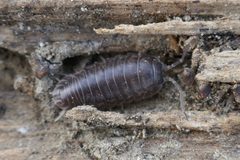
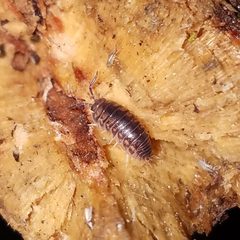
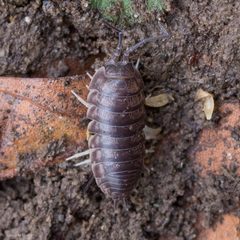
1- Cylisticus convexus(Curly Woodlouse)
Cylisticus is a of woodlice (terrestrial isopods) in the Cylisticidae, containing at least 70 described . These soil-dwelling crustaceans are found in tropical and temperate regions, where they inhabit the upper soil layers. At least one species, C. convexus, has been studied as a tropical soil decomposer with limited vertical ability. The genus is part of the diverse oniscidean fauna contributing to litter breakdown and nutrient cycling.
Pronunciation
How to pronounce Cylisticus: //sɪˈlɪstɪkəs//
These audio files are automatically generated. While they are not always 100% accurate, they are a good starting point.
Images
Habitat
Tropical and temperate soils; at least some occupy the top 0-30 cm of soil with highest densities at 0-10 cm depth. Prefers moist, slightly acidic sandy loam soils with high organic carbon content (>2.4%) and low nitrogen/phosphorus levels. Soils rich in calcium and magnesium are favored.
Distribution
Recorded from Denmark, Norway, Sweden, and Vermont (USA). C. convexus documented from three localities on the leeward side of the Southern Western Ghats in India (Tenkasi District, Tamil Nadu; Kollam District, Kerala): Mekkarai, Kottavasal, and Achenkovil.
Seasonality
varies seasonally in tropical : highest post-monsoon, moderate during monsoon, lowest pre-monsoon.
Diet
Feeds on organic matter and litter; contributes to organic matter decomposition in soil.
Behavior
Shows poor downward ability, with decreasing sharply below 10 cm. Exhibits in cracks of rocks and bark during unfavorable conditions.
Ecological Role
Soil decomposer and microarthropod contributing to organic matter decomposition and humus formation. Promotes production of soil aggregates through litter destruction.
More Details
Population Ecology
In C. convexus, correlates strongly with soil organic carbon availability. Highest recorded was 38.24±2.83 individuals/m² post-monsoon; lowest was 17.87±2.69 individuals/m² pre-monsoon.
Taxonomic Note
The was established by Schnitzler in 1853. The Cylisticidae is part of the suborder Oniscidea (woodlice), a diverse group of fully terrestrial isopods.