
Cylisticidae
Verhoeff, 1949
Cylisticid Woodlice
Genus Guides
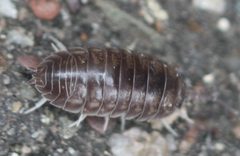
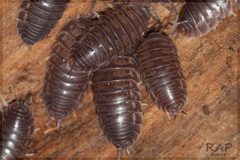
1Cylisticidae is a of terrestrial isopods (woodlice) in the order Isopoda, established by Verhoeff in 1949. The family contains at least 4 and more than 60 described , with Cylisticus being the most speciose genus containing 53 species. Members are classified within the suborder Oniscidea, infraorder Orthogonopoda, and series Crinocheta. The family includes two genera, Lepinisticus and Troglocylisticus, suggesting potential specialization or restricted distributions.
Pronunciation
How to pronounce Cylisticidae: //sɪˈlɪstɪsɪˌdiː//
These audio files are automatically generated. While they are not always 100% accurate, they are a good starting point.
Identification
Cylisticidae can be distinguished from other crinochete by a combination of morphological characters including the structure of the pleopodal lungs and the form of the uropods. The Cylisticus, which contains the majority of , has been historically recognized by specific features of the and pleon. Troglocylisticus and Lepinisticus are genera with presumably specialized morphologies reflecting their restricted distributions. Detailed identification requires examination of pleopodal exopodites and the shape of the frontal lamina.
Images
Habitat
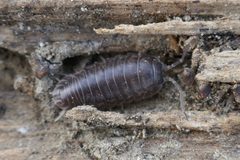
Cylisticidae occupy terrestrial environments, with at least one (Troglocylisticus) indicating cave-dwelling or troglobitic habits based on its name. The is part of the Crinocheta, a series of Oniscidea generally associated with moist terrestrial including forest litter, soil, and decaying wood. Specific microhabitat preferences for most genera remain poorly documented.
Distribution
Distribution records indicate presence in northern Europe (Denmark, Norway, Sweden) and North America (Vermont, United States). The Cylisticus has a broad Palearctic distribution. The genus Troglocylisticus is known from caves, suggesting localized occurrence. The full geographic range of the is incompletely known due to limited sampling and taxonomic study.
Ecological Role
As , Cylisticidae contribute to decomposition of organic matter and nutrient cycling in terrestrial . Their role in soil formation and litter breakdown follows the general ecological function of Oniscidea, though specific quantitative contributions for this have not been documented.
Similar Taxa
- ArmadillidiidaeBoth belong to the Crinocheta and share general woodlice ; distinguished by differences in pleopodal lung structure and uropod morphology.
- PorcellionidaeAnother large of Crinocheta with overlapping distribution; separation requires detailed examination of pleopodal exopodites and frontal lamina structure.
- TrachelipodidaeRelated crinochete with similar body plan; morphological differences in respiratory structures and uropod form are diagnostic.
More Details
Taxonomic History
The was established by Verhoeff in 1949. The Cylisticus, originally described by Schnitzler in 1853, was long classified within Porcellionidae before recognition of Cylisticidae as a distinct family. Two genera, Lepinisticus (1983) and Troglocylisticus (1983), were described by Ferrara & Taiti, indicating ongoing refinement of family boundaries.
Research Needs
The remains poorly studied compared to other Oniscidea families. Basic , specificity, and complete geographic distribution are unknown for most . The troglobitic Troglocylisticus warrants conservation attention given the vulnerability of cave-dwelling crustaceans.