
Diplocheta
Vandel, 1957
Rock Slaters
Family Guides
1- Ligiidae(Rock Lice)
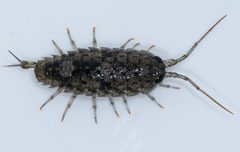
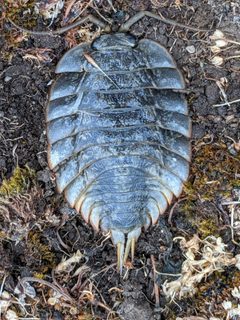
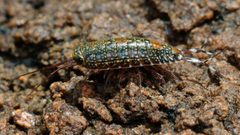
Diplocheta is an infraorder of terrestrial isopods commonly known as rock slaters. Members of this group are adapted to coastal and intertidal environments, showing morphological specializations for life in these . The group was established by Vandel in 1957 and includes the Ligiidae. These isopods represent an evolutionary transition between fully marine and fully terrestrial lifestyles.
Pronunciation
How to pronounce Diplocheta: //ˌdɪploʊˈkiːtə//
These audio files are automatically generated. While they are not always 100% accurate, they are a good starting point.
Identification
Diplocheta can be distinguished from other oniscidean isopods by their elongate, somewhat flattened bodies and relatively long . They possess well-developed adapted for activity in bright environments. The antennules (first antennae) are reduced and inconspicuous, appearing as though only one pair of antennae is present. They lack the deeply rounded body form typical of many woodlice.
Images
Habitat
Coastal rocky shorelines, intertidal zones, and splash zones above high tide marks. Found on rocks, driftwood, and other debris in marine-influenced environments. Requires high humidity and protection from desiccation, typically remaining in moist microhabitats during low tide.
Distribution
Widespread in coastal regions globally, with occurring on temperate and tropical shorelines. Present on Atlantic, Pacific, and Indian Ocean coasts.
Behavior
Active during daylight hours, unlike many terrestrial isopods. Aggregates in moist crevices and under debris to avoid desiccation during low tide. Rapidly retreats to sheltered positions when disturbed.
Ecological Role
Serves as decomposer in coastal , processing decaying organic matter including marine and stranded vegetation. Functions as prey for shorebirds, crabs, and other coastal .
Human Relevance
Occasionally encountered by beachgoers and coastal researchers. No significant economic impact; not considered a pest .
Similar Taxa
- LigiamorphaHistorically used as an alternative name for this group; has been unstable with Diplocheta and Ligiamorpha used interchangeably in literature
- Oniscidea (other infraorders)Other terrestrial isopods such as Armadillidiidae (pill bugs) and Porcellionidae (common woodlice) have more rounded, compact bodies and are typically found in fully terrestrial away from shorelines
More Details
Taxonomic instability
The name Diplocheta has been applied inconsistently in the literature, sometimes as infraorder, sometimes as parvorder, and sometimes synonymized with Ligiamorpha. Current treatments generally recognize Diplocheta as infraorder within suborder Oniscidea.
Antennal reduction
The reduced antennules give Diplocheta the appearance of having only one pair of , which has led to confusion with insects by observers unfamiliar with isopod .