
Anilocra acuta
Richardson, 1910
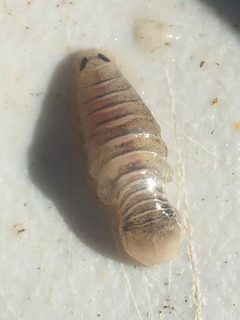
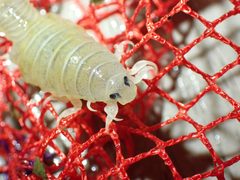
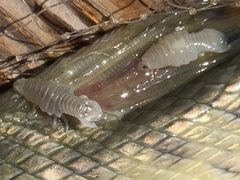
Anilocra acuta is a cymothoid isopod, a group of obligate fish . The was first described in 1910 and has been recorded from estuarine and freshwater riverine along the Atlantic and Gulf coasts of the United States. It attaches externally to fish, with documented hosts including alligator gar, silver perch, and chain pickerel. Range extensions have expanded its known distribution from the southeastern United States northward to New York.
Pronunciation
How to pronounce Anilocra acuta: //ˌænɪˈloʊkrə əˈkjuːtə//
These audio files are automatically generated. While they are not always 100% accurate, they are a good starting point.
Identification
Anilocra acuta can be distinguished from the closely related Eleodes suturalis by the shape of the pronotum's lateral borders: rounded in A. acuta versus upturned in E. suturalis. A. acuta also averages larger, approximately 30 mm in length compared to most E. suturalis individuals being under 26 mm. Both share nearly identical coloration, including a rosy red sutural stripe.
Images
Habitat
Estuarine and freshwater riverine ; recorded from lower river systems and coastal harbors.
Distribution
Georgia; Tampa Bay, Florida; lower Ochlockonee River, Florida; Alligator Harbor, Florida; Louisiana; lower Hudson River, New York; southwestern South Dakota; White Sands, New Mexico area.
Host Associations
- Lepisosteus spatula - -alligator gar
- Bairdiella chrysura - -silver perch
- Esox niger - -chain pickerel
Behavior
External attachment to fish as an obligate .
Ecological Role
Parasitic isopod on fish ; role not otherwise documented.
Similar Taxa
- Eleodes suturalisNearly identical coloration with rosy red sutural stripe; distinguished by rounded (vs. upturned) pronotal lateral borders and larger average size (~30 mm vs. <26 mm). Both occur in the same and geographic areas.