
Arcitalitrus sylvaticus
(Haswell, 1879)
lawn shrimp, lawn prawn, landhopper
Arcitalitrus sylvaticus is a terrestrial amphipod native to Australia and nearby Pacific regions. It has been introduced to California, New Zealand, North Carolina, and Florida, with the first California record in 1967. The is highly sensitive to moisture conditions, perishing in dry environments and drowning in saturated soils. It serves as a significant primary decomposer of leaf litter in its .
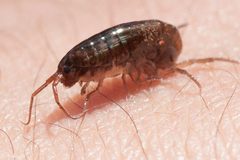
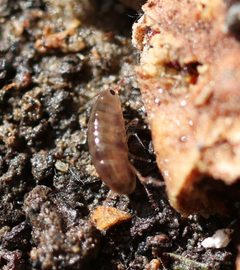
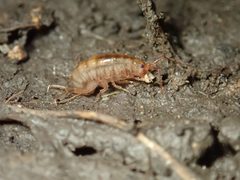
Identification
Distinguished from other terrestrial amphipods by its fully terrestrial lifestyle and association with moist leaf litter rather than coastal . In introduced ranges, it may be confused with other talitrid amphipods such as Arcitalitrus dorrieni, though A. sylvaticus has been documented specifically from California, Florida, and North Carolina introductions. Morphological identification requires examination of appendage structure and body proportions typical of the Arcitalitrus.
Images
Habitat
Moist terrestrial environments, particularly leaf litter and soil layers. In introduced ranges, commonly found in irrigated lawns and gardens where overwatering creates suitable humid conditions. Requires environments that maintain consistent moisture without waterlogging.
Distribution
Native to Australia and nearby Pacific islands. Introduced to California (first recorded 1967), New Zealand, North Carolina, and Florida. Present in Hawaii based on distribution records.
Diet
Decaying leaves and leaf litter. Serves as a primary decomposer in its .
Behavior
Exhibits avoidance in response to excessive moisture, leaving burrows or soil when soils become waterlogged. This behavior makes it conspicuous in overwatered lawns and gardens. Sensitive to desiccation, requiring humid microhabitats for survival.
Ecological Role
Significant primary decomposer of leaf litter. in exceeds that of other soil arthropods, indicating substantial contribution to nutrient cycling and organic matter breakdown in moist terrestrial .
Human Relevance
In California and other introduced regions, presence in lawns and gardens indicates overwatering practices. Serves as an for irrigation management. Not known to cause direct economic damage or provide direct benefits beyond services.
Similar Taxa
- Arcitalitrus dorrieniAnother terrestrial amphipod in the same with similar ; distinguished by geographic origin and specific morphological features of the appendages
- Talitroides spp.Other terrestrial amphipods in the ; distinguished by preferences and morphological characteristics
More Details
Physiological Sensitivity
The has been studied for its physiological , particularly adaptations to terrestrial life involving and thermal . These adaptations constrain its distribution to microhabitats with specific moisture regimes.
Invasion History
Introduction likely include transport in soil associated with plants or horticultural materials. Established in multiple U.S. states and New Zealand demonstrate capacity for successful establishment in suitable climates outside native range.
Sources and further reading
- BugGuide
- Wikipedia
- GBIF taxonomy match
- iNaturalist taxon
- NCBI Taxonomy
- Catalogue of Life
- The Wonderful World of Insects | Bug Squad
- Unexpected Treasure: The Entomological Value of Bycatch Examination
- Save wildlife - close the UK borders to plants - Buglife Blog - Buglife
- Agricultural and Environmental Modelling (AEM): A New Chapter for Modelling Science Publishing | Blog
- Physiological and Behavioral Ecology of the Terrestrial Amphipod Arcitalitrus Sylvaticus (Haswell, 1880)