
Pilumnus
Leach, 1816
hairy crabs
Species Guides
1- Pilumnus sayi(Spineback Hairy Crab)
Pilumnus is a of true crabs in the Pilumnidae, commonly known as hairy crabs due to their setose (bristly) . The genus is widely distributed in tropical and temperate coastal marine environments, with found in the Atlantic, Pacific, and Indian Oceans. Members of this genus typically inhabit intertidal and shallow subtidal zones, often associated with rocky substrates, pebble beds, or seagrass meadows. Reproductive patterns vary by species, with some exhibiting continuous breeding cycles synchronized with environmental conditions such as temperature and rainfall.
Pronunciation
How to pronounce Pilumnus: //ˈpɪləmnəs//
These audio files are automatically generated. While they are not always 100% accurate, they are a good starting point.
Identification
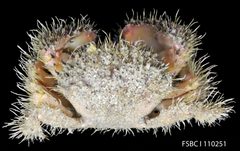
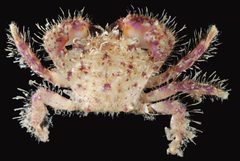
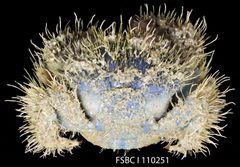
Pilumnus are distinguished from other brachyuran crabs by their densely setose (hairy) and appendages, a characteristic that gives the group its . The belongs to the Pilumnidae, which can be separated from similar crab families by a combination of carapace shape, orbital structure, and male . Species-level identification within Pilumnus requires examination of detailed morphological features, including the structure of the anterolateral margins, the form of the male pleopods (gonopods), and the pattern of setation on the legs.
Images
Habitat
Intertidal and shallow subtidal marine environments. have been documented on rocky substrates, pebble beds, and in seagrass meadows, particularly those dominated by Thalassia testudinum. One species, Pilumnus vespertilio, is a typical inhabitant of intertidal pebble and rocky substrates on East African coasts.
Distribution
Widespread in tropical and temperate coastal waters of the Atlantic, Pacific, and Indian Oceans. Documented occurrences include: the western Atlantic (Northeastern Brazil, with Pilumnus dasypodus extending into the Atlantic Tropical Ecoregion); the Colombian Caribbean (Pilumnus pannosus recorded from the Guajira Peninsula); the East African coast including southern Mozambique (Pilumnus vespertilio); and the Mediterranean Sea (Pilumnus inermis in the Straits of Messina and southern Tyrrhenian Sea).
Seasonality
Reproductive seasonality varies by and region. Pilumnus vespertilio in East Africa shows continuous breeding with peak in March and December, and decreased activity from April to July. Moulting in this species occurs in two major peaks for females (January–March and October–December) and a single peak for males (October–December).
Host Associations
- Thalassia testudinum - associationPilumnus pannosus has been documented in seagrass meadows of this on the continental shelf of the Guajira Peninsula, Colombian Caribbean.
Life Cycle
Development follows the typical brachyuran pattern of -bearing (ovigerous) females releasing larvae into the plankton. In Pilumnus vespertilio, egg number increases with female size, ranging from approximately 300 to 8000 eggs per female. Moulting patterns differ between sexes, with females showing bimodal peaks and males showing unimodal peaks in activity.
Similar Taxa
- Other Pilumnidae generaPilumnus shares the Pilumnidae with several other ; separation requires detailed examination of structure, ornamentation, and setation patterns.
- Other hairy crab genera (e.g., some Xanthidae)The dense setation that gives Pilumnus its can superficially resemble that of some xanthid crabs, but Pilumnidae are distinguished by distinct grooves, orbital features, and male abdominal locking mechanisms.
More Details
Etymology
The name Pilumnus derives from a Roman nature deity associated with agriculture and child-rearing, who taught humanity to grind grain. The name likely alludes to the stout, robust form of these crabs or their association with the seafloor substrate.
Molecular phylogenetics
A 2025 study using molecular markers examined phylogenetic relationships among western Atlantic representatives of Pilumnus, with biogeographic implications for the in this region.
Sources and further reading
- BugGuide
- Wikipedia
- iNaturalist taxon
- NCBI Taxonomy
- Catalogue of Life
- PILUMNUS INERMIS (DECAPODA, BRACHYURA) IN THE STRAITS OF MESSINA AND THE SOUTHERN TYRRHENIAN SEA (MEDITERRANEAN SEA): DISTRIBUTION AND SOME ASPECTS OF ITS ECOLOGY
- New records of the hairy crab Pilumnus dasypodus (Decapoda, Brachyura, Pilumnidae) in Northeastern Brazil
- FIRST RECORD OF PILUMNUS PANNOSUS RATHBUN (DECAPODA: BRACHYURA: PILUMNIDAE) FROM THE COLOMBIAN CARIBBEAN
- Reproductive biology of the hairy crab Pilumnus vespertilio (Brachyura: Pilumnidae) in the East African region
- Phylogenetic relationships among western Atlantic representatives of Pilumnus Leach, 1816 (Decapoda, Brachyura, Pilumnidae) based on molecular markers, with comments on biogeography.