
Lophopanopeus bellus
(Stimpson, 1860)
black-clawed crab, Blackclaw Crestleg Crab
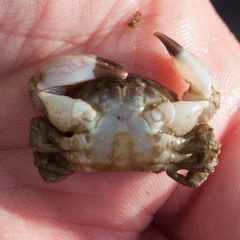
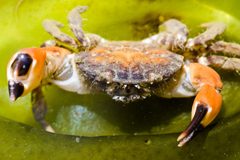
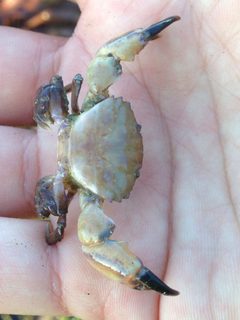
Lophopanopeus bellus is a small crab native to the Pacific coast of North America, ranging from Alaska to California. The is characterized by its rounded with low , black claws, and highly variable coloration. Two are recognized: L. b. bellus in the northern portion of the range and L. b. diegensis in the southern portion. The species is notable for being parasitized by the barnacle Loxothylacus panopaei.
Pronunciation
How to pronounce Lophopanopeus bellus: /ˌlɒfəˈpænəpiːəs ˈbɛləs/
These audio files are automatically generated. While they are not always 100% accurate, they are a good starting point.
Identification
Distinguished from similar-sized Glebocarcinus oregonensis by (rounded projections) on the chelipeds rather than spiny ridges. The rounded with low tubercles and black claws are diagnostic. The variable coloration can make identification challenging; examination of cheliped structure is most reliable.
Images
Habitat
Marine intertidal and shallow subtidal zones along the Pacific coast. Specific substrate preferences not well documented in available sources.
Distribution
Pacific coast of North America from Alaska to California. Two with partially overlapping ranges: L. b. bellus occurs from Resurrection Bay, Alaska to Cayucos, California; L. b. diegensis occurs from Monterey Bay to San Diego, California.
Seasonality
Breeding begins in April in the Puget Sound area. hatch from May onwards, with many females carrying a second that hatches in August.
Host Associations
- Loxothylacus panopaei - Many individuals are parasitized by this barnacle
Life Cycle
Breeding begins in April (Puget Sound area). Females carry on the underside of the for protection. Eggs hatch from May onwards; many females produce a second hatching in August. After hatching, zoea larvae become free-living planktonic forms.
Similar Taxa
- Glebocarcinus oregonensisSimilar size and general appearance, but distinguished by spiny ridges on chelae rather than
More Details
Subspecies
Two recognized with partially overlapping distributions in central California