
Taliepus nuttallii
(Randall, 1840)
southern kelp crab, globose kelp crab
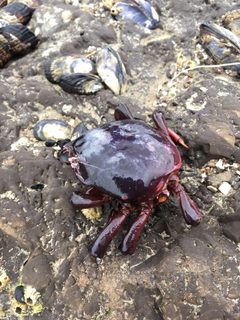
Taliepus nuttallii, commonly known as the southern kelp crab or globose kelp crab, is a true crab in the Epialtidae. It inhabits kelp forest along the East Pacific coastline. The species was originally described as Epialtus nuttallii by Randall in 1840 before being transferred to the Taliepus. As a member of the kelp crab group, it is adapted to life among macroalgae, though specific ecological details remain limited in available sources.


Pronunciation
How to pronounce Taliepus nuttallii: /təˈlaɪəpəs ˌnʌˈtɔːli.aɪ/
These audio files are automatically generated. While they are not always 100% accurate, they are a good starting point.
Images
Habitat
Kelp forest along the East Pacific coastline. The is associated with macroalgae , particularly kelp beds, which provide both food resources and structural from .
Distribution
East Pacific Ocean. Distribution records indicate presence in this marine region, though specific coastal localities are not detailed in available sources.
More Details
Taxonomic history
Originally described as Epialtus nuttallii by Randall in 1840, this was later transferred to the Taliepus. The basionym Epialtus nuttallii is still recognized in some taxonomic databases.
Observation data
As of available records, iNaturalist documents 1,480 observations of this , indicating it is moderately well-documented by citizen scientists, though detailed biological studies appear limited in the accessible literature.