
Clibanarius
Dana, 1852
Species Guides
1- Clibanarius vittatus(Thinstripe Hermit Crab)
Clibanarius is a of hermit crabs in the Diogenidae, comprising approximately 60 valid as of 2025. Members possess soft, asymmetrical protected within scavenged gastropod shells. While predominantly marine, the genus includes C. fonticola, the only known hermit crab species to complete its entire in freshwater. The genus exhibits broad geographic distributions, with feeding rates documented to vary with temperature.
Pronunciation
How to pronounce Clibanarius: /ˌklɪbəˈnɛəriəs/
These audio files are automatically generated. While they are not always 100% accurate, they are a good starting point.
Identification
Distinguished from other diogenid by combination of morphological characters including structure, chela ornamentation, and eyestalk/antennal peduncle coloration. Molecular analysis of 16S rDNA and COI barcode regions supports -level separation where morphological similarity suggests potential synonymy. C. sclopetarius and C. vittatus, for example, are confirmed distinct species despite similar striped leg patterns, based on 4.5–5.9% divergence in 16S and 9.4–11.9% divergence in COI sequences, plus differences in telson and chela ornamentation.
Images
Appearance
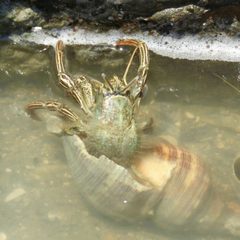
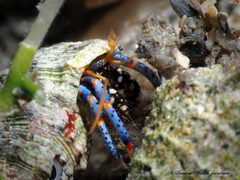
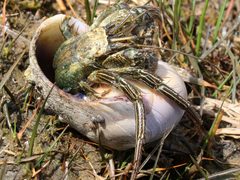
Soft, asymmetrical curled within borrowed gastropod shell. and appendages extend from shell aperture. Eyestalks present, often with distinct color patterns. Chelipeds (claws) typically asymmetrical, with major cheliped larger than minor. legs often display -specific color banding or striping patterns.
Habitat
Predominantly marine, occupying intertidal and subtidal zones including rocky shores, coral reefs, and coastal waters. C. fonticola is exceptional in inhabiting freshwater. occupy empty gastropod shells as portable shelters.
Distribution
Broadly distributed across tropical and temperate coastal waters worldwide. C. ransoni documented from Tahiti, Indonesia, Vietnam, Taiwan, and India (Gujarat). C. sclopetarius and C. vittatus sympatric in western Atlantic Ocean. C. erythropus recorded from UK shores.
Diet
, with on small animals and scavenging of carrion. Feeding rates vary with temperature.
Life Cycle
Development includes planktonic larval stages typical of decapod crustaceans. C. clibanarius exhibits continuous breeding without discrete seasonal peaks in tropical . Shell occupancy begins early in life and continues throughout adulthood.
Behavior
Agonistic interactions maintain individual distance between conspecifics; distances vary by pattern and are affected by prior housing . Precopulatory behavior in C. virescens involves males rotating the female's shell about an axis perpendicular to the shell aperture while holding it with ambulatory legs. C. antillensis and C. tricolor show similar interspecific and intraspecific spacing behavior. Shell selection behavior documented; shell architecture affects mating success in some contexts.
Ecological Role
Scavengers and of small . Shell occupation creates for associated invertebrate . Temperature-dependent feeding rates may influence reef system stability under climate change scenarios.
Human Relevance
C. erythropus (St Piran's Hermit Crab) subject to conservation interest in UK following local extinction and subsequent recolonization. Subject of citizen science monitoring programs (e.g., Shoresearch Cornwall). Some studied as indicators of microplastic in coastal .
Similar Taxa
- PagurusBoth are hermit crab , but Pagurus belongs to Paguridae (left-handed hermit crabs) with left cheliped larger, versus Diogenidae with right cheliped larger in Clibanarius
- DiogenesCongeneric Diogenidae; males of Diogenes avarus show distinct precopulatory shell-holding using minor cheliped with female aperture facing away, unlike Clibanarius virescens behavior
- CalcinusFormerly included in Clibanarius but reassigned to separate based on morphological differences
More Details
Taxonomic instability
Several formerly assigned to Clibanarius have been reassigned to other diogenid : Bathynarius, Calcinus, Paguristes, Strigopagurus, and Trizopagurus. Clibanarius elongatus is considered .
Conservation significance
C. erythropus disappeared from UK shores in late 1980s and has only recently recolonized, making it a of particular conservation interest for monitoring programs.
Climate sensitivity
Feeding rates change with temperature, which given broad distributions may have considerable consequences for reef system stability as sea temperatures rise.
Sources and further reading
- BugGuide
- Wikipedia
- iNaturalist taxon
- NCBI Taxonomy
- Catalogue of Life
- Marine invertebrates with Cornwall Wildlife Trust - Buglife Blog - Buglife
- Reproduction of the Continuously Breeding Tropical Hermit Crab Clibanarius clibanarius
- Individual Distance in the Hermit Crabs Clibanarius Tricolor and Clibanarius Antillensis
- Molecular barcode and morphological analyses reveal the taxonomic and biogeographical status of the striped-legged hermit crab species Clibanarius sclopetarius (Herbst, 1796) and Clibanarius vittatus (Bosc, 1802) (Decapoda : Diogenidae)
- Stimuli Involved in the Feeding Behavior of the Hermit Crab Clibanarius Vittatus (Decapoda, Paguridea)
- POPULATION ECOLOGY OF THE HERMIT CRAB CLIBANARIUS VITTATUS (DECAPODA: DIOGENIDAE) AT SEBASTIAN INLET, FLORIDA
- Size Relationships and Aggressive Behavior in the Hermit Crab Clibanarius vittatus
- Precopulatory Behaviour of the Hermit Crabs Diogenes Avarus and Clibanarius Virescens
- First record of Hermit crab Clibanarius ransoni Forest, 1953 (Crustacea: Anomura: Diogenidae) from India
- Invertebrates Associated with the Thinstripe Hermit Clibanarius vittatus (Bosc) (Crustacea: Decapoda: Diogenidae) from the Barrier Islands of Mississippi
- A comparative analysis of microplastic contamination in hermit crab Clibanarius rhabdodactylus Forest, 1953, inhabiting intertidal and subtidal Coastal habitat of Gujarat state.