
Coenobitidae
Dana, 1851
Land Hermit Crabs, Terrestrial Hermit Crabs
Genus Guides
1- Coenobita(land hermit crabs)
Coenobitidae is the of terrestrial hermit crabs, comprising approximately 17-18 in two . are fully terrestrial but depend on marine environments for . Females return to the ocean to release ; larvae develop through planktonic zoeal stages before settling. Juveniles acquire empty gastropod shells and migrate to land, where they continue development. The family is distributed throughout coastal tropical regions worldwide.
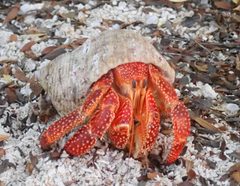
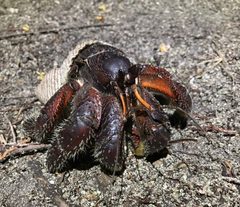
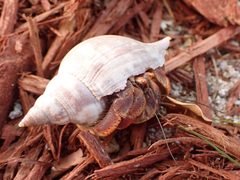
Pronunciation
How to pronounce Coenobitidae: /ˌsiːnəˈbɪtədaɪ/
These audio files are automatically generated. While they are not always 100% accurate, they are a good starting point.
Images
Habitat
Strictly coastal tropical environments including beaches, mangroves, and inland forests. require humid terrestrial conditions with access to freshwater sources. All life stages depend on proximity to ocean for and larval development.
Distribution
Coastal tropical regions worldwide, including Indo-Pacific, Atlantic, and Caribbean shorelines.
Life Cycle
hatch in seawater; larvae pass through multiple planktonic zoeal stages and a megalopa stage in marine environment. Megalopae settle, obtain gastropod shells, and migrate to land. Terrestrial juveniles to first crab stage and continue development on land. do not return to sea except for females to release eggs.
Behavior
are strictly terrestrial but require shell-carrying for protection; megalopae actively seek and co-opt empty gastropod shells before land .
Ecological Role
Scavengers in coastal terrestrial ; contribute to nutrient cycling and seed in some . Shell acquisition creates competition with other shell-using organisms.
Human Relevance
Popular in pet trade; some collected for food in certain regions. degradation and shell availability limits affect .