
Polyonyx
Stimpson, 1858
Species Guides
1- Polyonyx gibbesi(eastern tube crab)
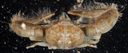
Polyonyx is a of porcelain crabs ( Porcellanidae) comprising at least 42 described . Most species are obligate commensals of chaetopterid polychaete worms, living inside the tubes of their . The genus exhibits a transversally cylindrical body form adapted for lateral movement within worm tubes. Several species frequently cohabit host tubes with other , including larger porcellanids, pinnotherid crabs, and nudibranchs.
Pronunciation
How to pronounce Polyonyx: /pəlɪˈoʊnɪks/
These audio files are automatically generated. While they are not always 100% accurate, they are a good starting point.
Images
Habitat
Marine benthic environments; obligate commensals inhabiting the tubes of chaetopterid polychaete worms (Chaetopterus and related ). Some occupy soft sediment where worms construct their tubes.
Distribution
Indo-West Pacific region, including South China Sea (Vietnam), Taiwan, and western Atlantic (South Carolina, USA). At least one recorded from Mozambique.
Host Associations
- Chaetopterus variopedatus - commensalObligate commensal; tube-dwelling
- Chaetopterus sp. - commensalMultiple Polyonyx documented as
Life Cycle
Includes zoeal larval stage. Developmental details vary by ; some species have been observed as heterosexual pairs within tubes.
Behavior
Obligate commensalism with chaetopterid polychaetes. Frequently lives in male-female pairs within tubes. Some exhibit resource partitioning that allows coexistence with larger occupying the same host tube. Documented swimming in at least one species (Polyonyx bella).
Ecological Role
Commensal contributing to high in polychaete tube . Part of tightly packed symbiont with low dominance. Some species facilitate coexistence of multiple decapod symbionts through spatial partitioning within tubes.
Similar Taxa
- PinnixaAlso commensal in Chaetopterus tubes; Polyonyx gibbesi has more southern distribution and lower temperature than Pinnixa chaetopterana
- PachychelesAnother porcellanid ; Polyonyx distinguished by transversally cylindrical habitus adapted for lateral movement in worm tubes
More Details
Species diversity
The contains at least 42 described , with new species continuing to be described (e.g., Polyonyx socialis, 2019; Polyonyx deezi, 2022). Many species belong to the P. sinensis species group, a worldwide distributed morphological lineage characterized by obligate chaetopterid commensalism.
Co-symbiosis patterns
Some Polyonyx frequently share tubes with other . Polyonyx socialis cohabits with the larger porcellanid P. heok and trinchesiid nudibranchs. Resource partitioning allows smaller species with flattened appendages to occupy inner tube walls while larger species occupy the main cavity.
Sources and further reading
- BugGuide
- Wikipedia
- GBIF taxonomy match
- iNaturalist taxon
- NCBI Taxonomy
- Catalogue of Life
- Physiological ecology of the commensal crabs, Polyonyx gibbesi haig and Pinnixa chaetopterana stimpson
- Polyonyx Bella, New Species (Decapoda: Anomura: Porcellanidae), From Taiwan, With Notes on Its Reproduction and Swimming Behavior
- Figure 6: Symbiotic species associated with Chaetopterus sp.: (A, B) Polyonyx cf. heok (male and female, respectively); (C, D) Tetrias sp. (male and female, respectively); (E, F) Polyonyx sp., (male and female, respectively); (G, F) Phestilla sp. (whole body and egg-mass, respectively); egg-mass indicated by arrows.
- A new species of Polyonyx (Crustacea, Anomura, Porcellanidae) inhabiting polychaete-worm tubes (Annelida, Chaetopteridae) in the Indo-West Pacific
- Trace and major elements distribution and transfer within a benthic system: Polychaete Chaetopterus variopedatus, commensal crab Polyonyx gibbesi, worm tube, and sediments
- Taxonomy and ecology of the porcellanid crabPolyonyx cometesWalker, 1887 (Crustacea: Decapoda), with description of a new genus