
Polyonyx gibbesi
Haig, 1956
eastern tube crab
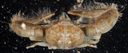
Polyonyx gibbesi, commonly known as the eastern tube crab, is a porcelain crab in the Porcellanidae. It is an obligate commensal that inhabits the tubes of polychaete worms, particularly Chaetopterus species. The species has been studied for its physiological , showing lower thermal compared to some co-occurring commensal crabs. It occurs in the western Atlantic Ocean including the Gulf of Mexico and Lesser Antilles.
Pronunciation
How to pronounce Polyonyx gibbesi: //pəˈlaɪəˌnɪks ˈɡɪbˌesi//
These audio files are automatically generated. While they are not always 100% accurate, they are a good starting point.
Identification
As a member of Porcellanidae, Polyonyx gibbesi possesses the flattened body and reduced fifth legs typical of porcelain crabs. It can be distinguished from the facultatively commensal Pinnixa chaetopterana by its obligate association with Chaetopterus worm tubes and its more southerly distribution. Specific morphological distinguishing features from are not documented in available sources.
Images
Habitat
Marine benthic environment. Obligate commensal inhabitant of tubes constructed by polychaete worms of the Chaetopterus, including Chaetopterus variopedatus.
Distribution
Western Atlantic Ocean, including the Gulf of Mexico and Lesser Antilles. Distribution is more southerly than that of the related commensal crab Pinnixa chaetopterana.
Host Associations
- Chaetopterus variopedatus - commensal Inhabits worm tube; obligate commensalism
Life Cycle
Includes zoeae larval stage. inhabit worm tubes.
Behavior
Obligate commensal lifestyle, permanently residing within polychaete worm tubes. This represents a tighter association than the facultative commensalism shown by some related .
Ecological Role
Participates in trace and major element transfer within benthic systems. As a commensal inhabitant of polychaete tubes, influences elemental distribution between , tube structure, and surrounding sediments.
Similar Taxa
- Pinnixa chaetopteranaAlso commensal with Chaetopterus, but distinguished by facultative (vs. obligate) commensalism and more northerly distribution. Polyonyx gibbesi shows lower thermal limits in comparative studies.
More Details
Thermal Physiology
Comparative physiological studies from South Carolina indicate that both zoeae and have lower high and low lethal temperature limits than Pinnixa chaetopterana, consistent with its more southern distribution.
Sources and further reading
- BugGuide
- Wikipedia
- GBIF taxonomy match
- iNaturalist taxon
- NCBI Taxonomy
- Catalogue of Life
- Physiological ecology of the commensal crabs, Polyonyx gibbesi haig and Pinnixa chaetopterana stimpson
- Trace and major elements distribution and transfer within a benthic system: Polychaete Chaetopterus variopedatus, commensal crab Polyonyx gibbesi, worm tube, and sediments