
Euceramus praelongus
Stimpson, 1860
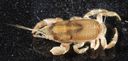
Euceramus praelongus is a of porcelain crab in the Porcellanidae, described by Stimpson in 1860. It belongs to the infraorder Anomura, which includes hermit crabs and related groups. The species is known from limited records in the western Atlantic Ocean and Gulf of Mexico. Available information is sparse, with only nine observations documented on iNaturalist.
Pronunciation
How to pronounce Euceramus praelongus: //juːˈsɛrəməs preɪˈlɒŋɡəs//
These audio files are automatically generated. While they are not always 100% accurate, they are a good starting point.
Identification
As a member of Porcellanidae, E. praelongus likely exhibits the flattened body form and reduced fifth legs characteristic of porcelain crabs. Specific diagnostic features distinguishing it from are not documented in available sources. The Euceramus contains few ; accurate identification would require examination of , cheliped structure, and gill characteristics.
Images
Habitat
Distribution records indicate occurrence in marine environments of the western Atlantic Ocean and Gulf of Mexico. Specific substrate associations or depth ranges are not documented.
Distribution
Western Atlantic Ocean; Gulf of Mexico. Presence confirmed in these regions based on GBIF distribution records.
Similar Taxa
- Other Euceramus speciesThe contains few ; morphological examination of and appendage proportions would be necessary for differentiation.
- Other Porcellanidae generaPorcelain crabs share flattened bodies and reduced fifth pereiopods; -level identification requires detailed examination of mouthparts and gill structure.
More Details
Taxonomic note
Euceramus is a small within the diverse porcelain crab . The specific epithet 'praelongus' (Latin: 'very long') likely refers to elongated body proportions relative to related , though original description details are not summarized in available sources.
Data limitations
This is poorly represented in public databases. The nine iNaturalist observations and sparse literature records suggest it may be genuinely rare, cryptic, or under-sampled in its .