
Eurycercus
Baird, 1843
Species Guides
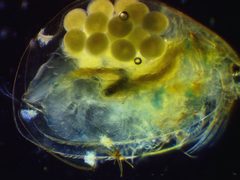
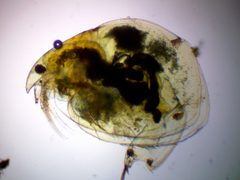
1Eurycercus is a of large-bodied cladoceran crustaceans (water fleas) and the sole genus of the Eurycercidae. reach up to 6 mm in length, making them among the largest anomopods. The genus contains 16 described species distributed across four subgenera, with a primarily Holarctic distribution and some extensions into the Neotropics and Southern Hemisphere. Species occupy of freshwater lakes and ponds, often associated with submerged vegetation.
Pronunciation
How to pronounce Eurycercus: /ˌjʊrɪˈsɜrkəs/
These audio files are automatically generated. While they are not always 100% accurate, they are a good starting point.
Images
Habitat
Freshwater lakes and ponds, primarily in with aquatic vegetation. Some occupy oligotrophic heath and dune localities. Eurycercus glacialis is largely restricted to fishless water bodies in northern regions.
Distribution
Holarctic distribution with extensions to South America (Colombia, Argentina) and South Africa. Eurycercus lamellatus is widely distributed across North America (south to Mexico City), Eurasia (south to Algeria and southern Tibet), with disjunct in Argentina and South Africa. Eurycercus glacialis has a more restricted northern distribution, centered on Greenland-Iceland, with populations in the outer Aleutians, Labrador, northern Kuriles, and scattered localities in Denmark and the Netherlands.
Diet
Filter-feeder consuming , detritus, and small particulate organic matter.
Life Cycle
Parthenogenetic dominates under favorable conditions. is induced seasonally or under environmental stress, producing males and resting (ephippia) for dormancy. Embryonic development time is temperature-dependent.
Behavior
Associated with submerged vegetation in littoral areas. Exhibits behavioral responses to fish cues. Some show vertical patterns.
Ecological Role
Primary consumer and herbivore in freshwater . Important prey item for fish and . Eurycercus lamellatus and E. macracanthus have high reproductive potential enabling survival under heavy pressure, while E. glacialis is vulnerable to fish predation due to delayed at larger sizes and lower reproductive output.
Similar Taxa
- SayciaEcological equivalent in Australia and New Zealand; distinguished by male including sexual seta on antennule, spatulate postabdominal claw tip, and sperm ducts opening near postabdominal tip rather than at base.
More Details
Subgeneric classification
Frey (1975) originally divided Eurycercus into three subgenera: E. (Eurycercus), E. (Bullatifrons), and E. (Teretifrons). Molecular and morphological revision suggests E. (Bullatifrons) should be synonymized with E. (Eurycercus), while E. (Teretifrons) remains distinct. A new E. beringi from Alaska shows intermediate characters between subgenera.
Species-level taxonomy
Eurycercus lamellatus sensu lato appears to be a complex of closely related . E. vernalis has been synonymized with E. longirostris due to lack of morphological and genetic justification for separation. E. polyodontus likely represents large individuals of E. lamellatus at the upper end of a size-dependent tooth number regression.
Sources and further reading
- BugGuide
- Wikipedia
- iNaturalist taxon
- NCBI Taxonomy
- Catalogue of Life
- Comparative Morphology and Biology of Three Species of Eurycercus (Chydoridae, Cladocera) with a Description of Eurycercus macrocanthus sp. nov.
- Corrections to: Comparative Morphology and Biology of Three Species of Eurycercus (Cladocera, Chydoridae) with a Description of Eurycercus macracanthus sp. nov.
- WORLDWIDE DISTRIBUTION AND ECOLOGY OF EURYCERCUS AND SAYCIA (CLADOCERA)1
- A revision of the subgenus Eurycercus (Eurycercus) Baird, 1843 emend. nov. (Cladocera: Eurycercidae) in the Holarctic with the description of a new species from Alaska
- The distribution and ecology of Eurycercus glacialis (Cladocera, Chydoridae) in Western Europe
- DISTRIBUTION OF EURYCERCUS (TERETIFRONS) GLACIALIS LILLJEBORG, 1887 (CLADOCERA, CHYDORIDAE) ON THE KURIL ARCHIPELAGO
- Behavioural response of plant-associated Eurycercus lamellatus (Ö.F. Müller) to different food sources and fish cues
- Eurycercus (Bullatifrons) norandinus (Crustacea: Branchiopoda: Eurycercidae), a new species of Cladocera in the Neotropical Region
- Influence of temperature on life-history characteristics of two sibling species of Eurycercus (Cladocera, Chydoridae)
- Growth, reproduction, and production dynamics of a littoral microcrustacean, Eurycercus vernalis (Chydoridae), from a southeastern wetland, USA
- Redescription of Eurycercus (Teretifrons) glacialis (Cladocera, Chydoridae), and description of a new species, E. (T.) nigracanthus, from Newfoundland, Canada