
Chydoridae
Genus Guides
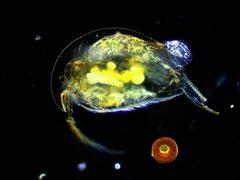
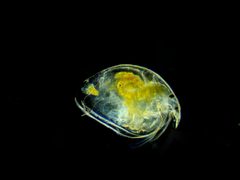
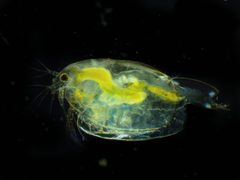
3Chydoridae is a large of small freshwater crustaceans (cladocerans) commonly known as water fleas, comprising over 50 and 520 described . Members are predominantly littoral or benthic inhabitants of freshwater , often associated with aquatic vegetation. The family exhibits a distribution with notable regional , including distinct Australian and Gondwanan faunas. Many species serve as important ecological indicators due to their specific requirements and excellent preservation in lake sediments. Several chydorid species have been introduced outside their native ranges and are considered threats to aquatic ecosystems.
Pronunciation
How to pronounce Chydoridae: /kaɪˈdɔːrɪdiː/
These audio files are automatically generated. While they are not always 100% accurate, they are a good starting point.
Images
Habitat
Freshwater environments including lakes, ponds, floodplain lakes, and vegetated . frequently occur among macrophytes such as Typha angustifolia and Potamogeton lucens. Some occupy benthic or show affinity for specific conditions: for example, Alona natalensis is confined to high-altitude mountainous areas with effective temperature index below 14°C. Australian species demonstrate continental regionalism with habitat specificity contributing to taxonomic distinctiveness.
Distribution
distribution spanning all continents except Antarctica. Documented from: Palearctic (including Kuril Archipelago, Norway, Russia), Nearctic (North America), Neotropics (Brazil, Colombia), Oriental region (India), Africa (Ethiopia, South Africa, Eastern Cape), and Australia. The subgenus Coronatella (Ephemeralona) exhibits a bipolar (antitropical) distribution pattern. Some show highly restricted ranges: Ovalona karelica is rare with limited documented occurrences; Alona natalensis appears to the Eastern Escarpment of South Africa.
Life Cycle
studies of Leydigia leydigi and Disparalona rostrata indicate variable number of instars, tentatively related to size. volume increases with parent length and decreases with temperature. Chydoridae produce large young relative to their size at maturity and mature early, resembling small planktonic cladocerans in this respect. However, growth is curtailed after onset of , resembling large planktonic cladocerans. This strategy may relate to vertebrate pressure and vegetation presence in .
Ecological Role
Important and significant component of aquatic , forming a critical link between primary producers and secondary consumers. High diversity and abundance in many freshwater . Valuable long-term ecological indicators due to diversity, abundance, specific requirements, and excellent preservation in sediments.
Human Relevance
Some Chydoridae have been introduced as non-native species and pose threats to aquatic . Serve as bioindicators for paleolimnological and ecological monitoring studies due to preservation in sediments. Taxonomic complexity creates impediments to accurate biodiversity assessment and conservation planning.
Sources and further reading
- BugGuide
- Wikipedia
- GBIF taxonomy match
- iNaturalist taxon
- NCBI Taxonomy
- Australian Chydoridae (Crustacea: Branchiopoda: Anomopoda): taxonomic impediments
- Morphology of Chydoridae (Cladocera) and their Distribution
- Two species of Alona (Cladocera, Chydoridae) new for Norway
- Life histories of some species of Chydoridae (Cladocera: Crustacea)
- First Record of Kurzia media (Birge 1879) (Cladocera: Chydoridae) in Brazil with notes on the holotype
- Re-evaluation of the genus Biapertura Smirnov, 1971 (Cladocera: Anomopoda: Chydoridae)
- Cladocerans of Alona affinis group (Cladocera: Anomopoda: Chydoridae) from North America
- First record of Parvalona parva (Daday, 1905) (Crustacea: Anomopoda: Chydoridae) from Colombia
- ON THE FINDING OF THE RARE SPECIES OVALONA KARELICA (STENROOS, 1897) (BRANCHIOPODA: ANOMOPODA: CHYDORIDAE) IN THE FLOOD-PLAIN LAKES OF THE KHOPER NATURE RESERVE
- A new species of Acroperus Baird, 1843 (Cladocera: Chydoridae) from Africa
- A new species related to Alona costata Sars, 1862 (Cladocera: Anomopoda: Chydoridae) from South Africa
- New species of Alpinalona Alonso & Sinev, 2017 (Cladocera: Anomopoda: Chydoridae) from South-East USA
- Note on Kurzia (Kurzia) latissima (Kurz, 1875) (Branchiopoda: Anomopoda: Chydoridae) from India
- DISTRIBUTION OF EURYCERCUS (TERETIFRONS) GLACIALIS LILLJEBORG, 1887 (CLADOCERA, CHYDORIDAE) ON THE KURIL ARCHIPELAGO
- Cladocera of subgenus Coronatella (Ephemeralona) Sinev, 2020 (Anomopoda: Chydoridae) from South Africa and Australia
- A phylogeographic pattern of the trans-Palaearctic littoral water flea Pleuroхus truncatus (O.F. Müller, 1785) (Cladocera: Chydoridae).