
Pycnogonida
Latreille, 1810
sea spiders, pycnogonids, Pantopoda
Order Guides
1- Pantopoda(Sea Spiders)
Pycnogonida is a class of marine arthropods commonly known as sea spiders. Over 1,300 have been described, ranging in leg span from 1 mm to over 70 cm. They occur in oceans worldwide from shallow coastal waters to deep sea and Antarctic regions. Males possess specialized ovigerous legs for carrying , a distinctive trait among chelicerates.
Pronunciation
How to pronounce Pycnogonida: //ˌpɪknəˈɡɒnɪdə//
These audio files are automatically generated. While they are not always 100% accurate, they are a good starting point.
Identification
The combination of marine , extremely long slender legs, reduced body size, and presence of a tubular distinguishes Pycnogonida from other chelicerate groups. Males can be identified by the presence of ovigerous legs. The number of leg pairs (typically four, occasionally five or six in some deep-sea ) and the structure of the proboscis and chelifores are used for -level identification.
Images
Appearance
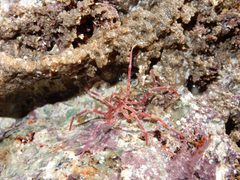
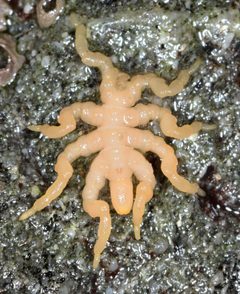
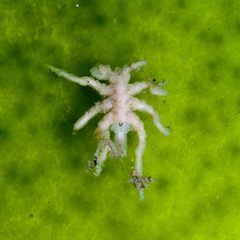
Small to moderately sized marine arthropods with extremely reduced bodies and very long, slender legs relative to body size. The body consists of a cephalon and trunk with typically four pairs of legs (some deep-sea have five or six pairs). The is prominent and tubular, used for feeding. Males possess ovigerous legs—modified appendages for carrying masses. Body size ranges from 1 mm leg span in shallow-water species to over 70 cm in Antarctic and deep-water forms.
Habitat
Exclusively marine environments. Found in benthic from intertidal zones to abyssal depths. Specimens have been collected from sand and mud substrates at depths of 21–36 m. Larger body sizes occur in Antarctic and deep-water habitats compared to shallow coastal waters.
Distribution
distribution in oceans worldwide. Documented from Fujian Province, China; Northern Hemisphere (Achelia echinata); North Atlantic and West Pacific (Paranymphon spinosum); Japan, Korea, and China (Nymphon akanei, Propallene longiceps). GBIF records include Denmark, Norway, Sweden, and Vermont, USA.
Life Cycle
Males carry on specialized ovigerous legs until hatching. Some groups lack a larval stage; others have protonymphon larvae. Males may simultaneously carry multiple egg masses from different females.
Behavior
Courtship involves male-female contact and chemical communication. Males use chelifores to grasp females during mating interactions. Pre-mating include tapping and stroking. Males aerate masses while carrying them. Sperm transfer occurs via external deposition or direct transfer.
Ecological Role
Component of marine macrobenthos in coastal and deep-sea .
Human Relevance
Subject of taxonomic and ecological research. Some serve as indicators of marine biodiversity. Not commercially exploited.
Similar Taxa
- OpilionesHarvestmen share superficial resemblance due to long legs, but differ in terrestrial , body fusion pattern, and lack of marine adaptations.
- AraneaeTrue spiders share chelicerate ancestry but differ in body plan, , and reproductive structures.
More Details
Reproductive biology
Male-exclusive parental care is a distinctive feature of the class. Males invest substantially in offspring by carrying and aerating , which may reduce their mobility and feeding capacity during periods.
Deep-sea gigantism
Antarctic and deep-water achieve substantially larger body sizes than shallow-water relatives, a pattern consistent with polar gigantism and deep-sea size trends in other marine groups.
Sources and further reading
- BugGuide
- GBIF taxonomy match
- iNaturalist taxon
- NCBI Taxonomy
- Catalogue of Life
- The Biology of Pycnogonida
- Courtship and mating behavior in the Pycnogonida (Chelicerata: Class Pycnogonida): a summary
- Pycnogonida (Arthropoda) from the Marine Biological Sample Museum in the Third Institute of Oceanography of MNR, with some new records and a checklist of Fujian, China.