
Eremocosta
Roewer, 1934
Species Guides
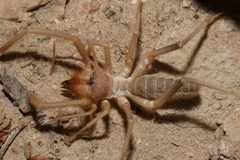
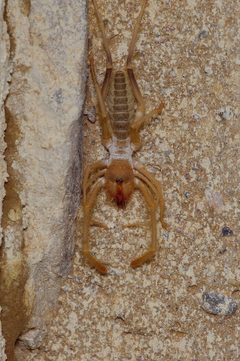
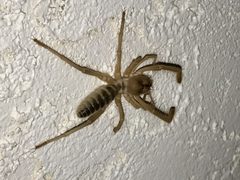
2- Eremocosta gigasella
- Eremocosta striata(windscorpion)
Eremocosta is a of large eremobatid camel spiders (Solifugae) distributed across North American deserts from southern and central Mexico to the western United States. in this genus are among the largest camel spiders, with body lengths exceeding 50 mm. Phylogenomic studies indicate the genus diversified within distinct desert regions beginning in the Chihuahuan Desert and progressing westward. The genus includes at least 14 recognized species, with evidence suggesting the presence of additional morphologically cryptic .
Pronunciation
How to pronounce Eremocosta: /ˌɛrəmoʊˈkɒstə/
These audio files are automatically generated. While they are not always 100% accurate, they are a good starting point.
Identification
Eremocosta are distinguished from other eremobatid by their exceptionally large body size, with exceeding 50 mm in length. Cheliceral is largely conserved across the genus, though E. titania exhibits pronounced : females possess globular cheliceral manus with wider, deeper fingers compared to males. Geometric morphometric analysis of can help distinguish species, though some cryptic species may require molecular identification.
Images
Habitat
Arid and semi-arid throughout North American deserts. Occupies extreme desert environments including the Chihuahuan Desert, Sonoran Desert, Mojave Desert, and associated low-elevation valleys such as the Colorado Desert, Death Valley, and lower Colorado River Valley. Also found in Californian coastal sage , Madrean Archipelago plateau and canyonland habitats, and adjacent non-desert environments.
Distribution
Southern and central Mexico throughout the western United States. Specific US states include Arizona, California, Nevada, New Mexico, and Texas. Mexican distribution encompasses multiple states with records throughout the arid regions. The spans major biogeographic barriers including the Salton Trough, Colorado River, and Cochise Filter Barrier.
Diet
Predatory arachnids that consume other arthropods. Specific prey preferences for Eremocosta have not been documented.
Behavior
activity pattern inferred from -level characteristics. Powerful used for prey capture and processing.
Ecological Role
Important within of North American arid . Their large size and predatory habits likely influence community structure through top-down effects on prey , though quantitative ecological studies are lacking.
Similar Taxa
- Other Eremobatidae generaEremocosta is distinguished by exceptionally large body size (>50 mm); most other eremobatids are substantially smaller.
- AmmotrechidaeAnother of New World camel spiders; Eremocosta can be distinguished by eremobatid cheliceral and lack of flagellar complex on male .
More Details
Phylogeography
-wide SNP data indicate Eremocosta diversified within distinct desert regions along an east-to-west progression, with the Chihuahuan Desert representing the ancestral range. E. titania shows evidence of post-glacial range expansion, with distribution substantially reduced during the last glacial maximum and recent of the Mojave Desert.
Cryptic Diversity
Phylogenomic analyses revealed unexpected phylogenetic positions for some , suggesting the contains additional morphologically cryptic not currently recognized through traditional .
Molecular Resources
The has been subject to -wide SNP analysis using museum specimens, demonstrating the utility of historical collections for phylogeographic research in organisms that are difficult to collect fresh.