
Cheliferidae
Risso, 1827
Genus Guides
1Cheliferidae is a of pseudoscorpions first described by Risso in 1827. It is nearly in distribution, occurring on all land masses and many oceanic islands. The family is divided into two (Cheliferinae and Philomaoriinae) and contains approximately 64 and 282 . Members occupy diverse including leaf litter, under tree bark, caves, and animal nests, with some species exhibiting phoretic on insects or association with beehives.
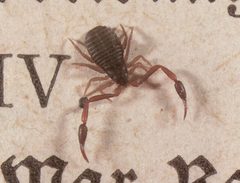
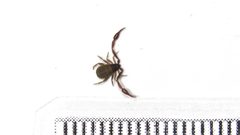
Pronunciation
How to pronounce Cheliferidae: //kəˈlɪfəˌraɪdiː//
These audio files are automatically generated. While they are not always 100% accurate, they are a good starting point.
Images
Habitat
Leaf litter, under tree bark, caves, and nests of vertebrates. Some are troglobionts (cave-adapted), while others occur in beehives or exhibit on tree-dwelling insects.
Distribution
Nearly ; present on all land masses and many oceanic islands. Specific regional records include: Thailand (Tak, Chiangmai, Nakhon Ratchasima provinces), China (Guizhou), Cambodia, Laos, Philippines, Vietnam, Nepal, and Scandinavian countries (Denmark, Norway, Sweden). Ellingsenius occurs in Afrotropical, Indo-Malayan, and Mediterranean regions.
Host Associations
- Apis cerana cerana - commensalEastern ; specimens of Ellingsenius renae and all previously known Ellingsenius collected from beehives
Behavior
on tree-dwelling insects has been observed. Multiple Ellingsenius are associated with beehives, though the nature of this relationship remains to be fully characterized.
More Details
Taxonomic scope
As of October 2023, the World Pseudoscorpiones Catalog accepts 64 in Cheliferidae. The is divided into Cheliferinae and Philomaoriinae.
Cave adaptation
Metachelifer includes troglobiont with specialized cave-adapted , including four species described from Thailand caves.
Sources and further reading
- BugGuide
- Wikipedia
- GBIF taxonomy match
- iNaturalist taxon
- NCBI Taxonomy
- Catalogue of Life
- Intruders in beehives? New bee-associated Ellingsenius species (Pseudoscorpiones, Cheliferidae) from China based on morphological data and molecular analyses, with comments on pseudoscorpion-bee relationships.
- Cave-inhabiting Cheliferidae (Arachnida, Pseudoscorpiones) from Thailand, with description of four new species of Metachelifer Redikorzev.