
Pseudogarypus
Ellingsen, 1909
Species Guides
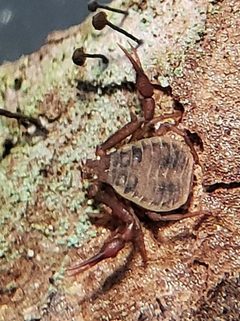
1Pseudogarypus is a of pseudoscorpions in the Pseudogarypidae, first described by Ellingsen in 1909. The genus includes both extant and extinct , with at least four species known from Eocene fossils preserved in Baltic amber. Members of this genus are distinguished by distinctive morphological features including horn-like protrusions on the and elongated chelae. The extinct species P. synchrotron was described in 2011 using synchrotron imaging to reveal details obscured by amber inclusions.
Pronunciation
How to pronounce Pseudogarypus: /ˌsjuː.doʊˈɡɛər.ɪ.pəs/
These audio files are automatically generated. While they are not always 100% accurate, they are a good starting point.
Identification
Pseudogarypus can be distinguished from other pseudoscorpion by a unique combination of features: horn-like protrusions and projecting ridges on the , reticulate patterning on the carapace surface, and distinctly elongated chelae with length-to-width ratios around 5:1. The bears two sets of horn-like protrusions creating an uneven outline, with larger projections positioned posteriorly. These features are not found in combination in any other pseudoscorpion genus.
Images
Distribution
The has been documented from Baltic amber deposits in Europe, with fossils approximately 46 million years old from the Lutetian stage of the Middle Eocene. Extant distributions are not specified in available sources.
Human Relevance
The extinct P. synchrotron was the subject of a 2011 study using synchrotron radiation imaging at the European Synchrotron Radiation Facility, demonstrating advanced paleontological techniques for studying amber inclusions. The specific epithet 'synchrotron' directly references this methodology.
Similar Taxa
- Other Pseudogarypidae generaPseudogarypus is distinguished from other in the same by its unique combination of protrusions, reticulate patterning, and elongated chelae
- Pseudogarypus extensusThe only other Pseudogarypus with comparably elongated chelae; P. synchrotron chelae are slightly shorter with 5:1 ratio versus even longer proportions in P. extensus
More Details
Fossil preservation
Pseudogarypus synchrotron specimens are preserved in Baltic amber with significant challenges for study: the has hidden upper surfaces due to positioning and air bubble interference, while the exhibits 'Baltic mould' (whitish amber coating) and cracking tendencies possibly from volatile evaporation
Type specimens
specimen number 236 934 is housed at the Royal Museum for Central Africa in Tervuren, Belgium; is held in the personal collection of Hans Henderickx
Amber source uncertainty
Exact geographic origin of the Baltic amber specimens is unknown as both were acquired through commercial dealers—one in Lithuania, one in the United States