
Cryptomaster
Briggs, 1969
daddy longlegs
Species Guides
1- Cryptomaster leviathan(Leviathan harvestman)
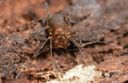
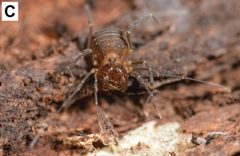
Cryptomaster is a of armoured harvestmen (Opiliones) in the Cryptomastridae, established in 1969 and containing two described : C. leviathan and C. behemoth. Both species are to the mountains of southwest Oregon and represent short-range endemic arachnids. The genus remained understudied for decades until 2016, when expanded distributional records of C. leviathan prompted discovery of the second species. These harvestmen belong to the suborder Laniatores, characterized by relatively short legs and cryptic habits in forest floor .
Pronunciation
How to pronounce Cryptomaster: //ˌkrɪptoʊˈmæstər//
These audio files are automatically generated. While they are not always 100% accurate, they are a good starting point.
Identification
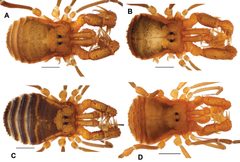
Distinguished from other travunioid harvestmen by larger body size. The two can be separated by distribution and genetic patterns: C. leviathan shows small across expanded range, while C. behemoth occupies more restricted range with greater genetic variation. Both species display intraspecific size dimorphism (smaller and larger forms) that does not correspond to genetic differentiation. Identification to species level likely requires molecular data due to morphological similarity.
Images
Appearance
Armoured harvestmen with relatively short legs typical of the suborder Laniatores. Both exhibit two distinct morphological forms within each species: a smaller form and a larger form. The name 'Cryptomaster' and species epithets 'leviathan' and 'behemoth' reference their comparatively large body size relative to other travunioid daddy longlegs. Specific external morphological details for the genus as a whole are not documented in available sources.
Habitat
Montane forests in southwest Oregon. Specimens found hiding underneath logs, stones, and leaf litter in temperate forest floor . The prefers cryptic microhabitats in mountainous terrain.
Distribution
Restricted to mountains of southwest Oregon, USA. C. leviathan has expanded across multiple mountain ranges; C. behemoth known from more restricted range.
Behavior
Cryptic : hides under logs, stones, and leaf litter. Both exhibit two morphological forms (smaller and larger) observed in males and females across all known localities, but these forms do not represent genetically distinct groups.
Ecological Role
Contributes to short-range biodiversity in montane forest . Part of leaf litter and soil fauna in temperate forests.
Human Relevance
Research interest due to status as short-range arachnids highlighting biodiversity significance of mountainous southern Oregon. No documented economic or medical importance.
Similar Taxa
- Other TravunioideaSmaller body size; Cryptomaster distinguished by excessive size relative to travunioid relatives
More Details
Genetic patterns
C. leviathan shows surprisingly small between despite expanded distributional range. In contrast, C. behemoth occupies more restricted range yet displays considerably more genetic variation.
Discovery history
established 1969 with C. leviathan; remained until 2016 when C. behemoth was described following renewed survey effort prompted by new locality records of the first .
Conservation significance
Highlighted by authors as important example of short-range arachnids; mountainous southern Oregon identified as hotspot for endemic animal .