Sabacon cavicolens
(Packard, 1884)
North American cavernicolous Harvestman
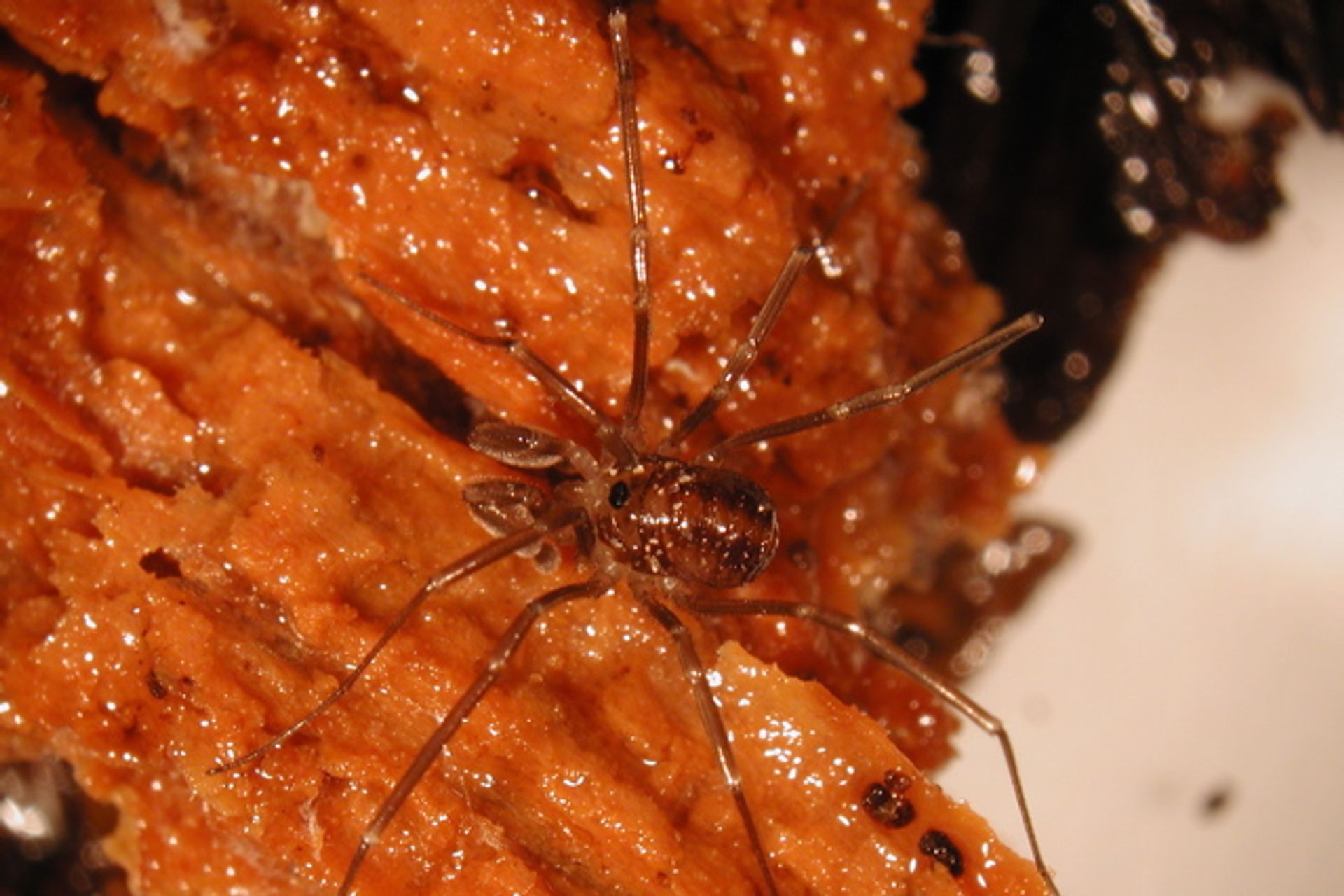
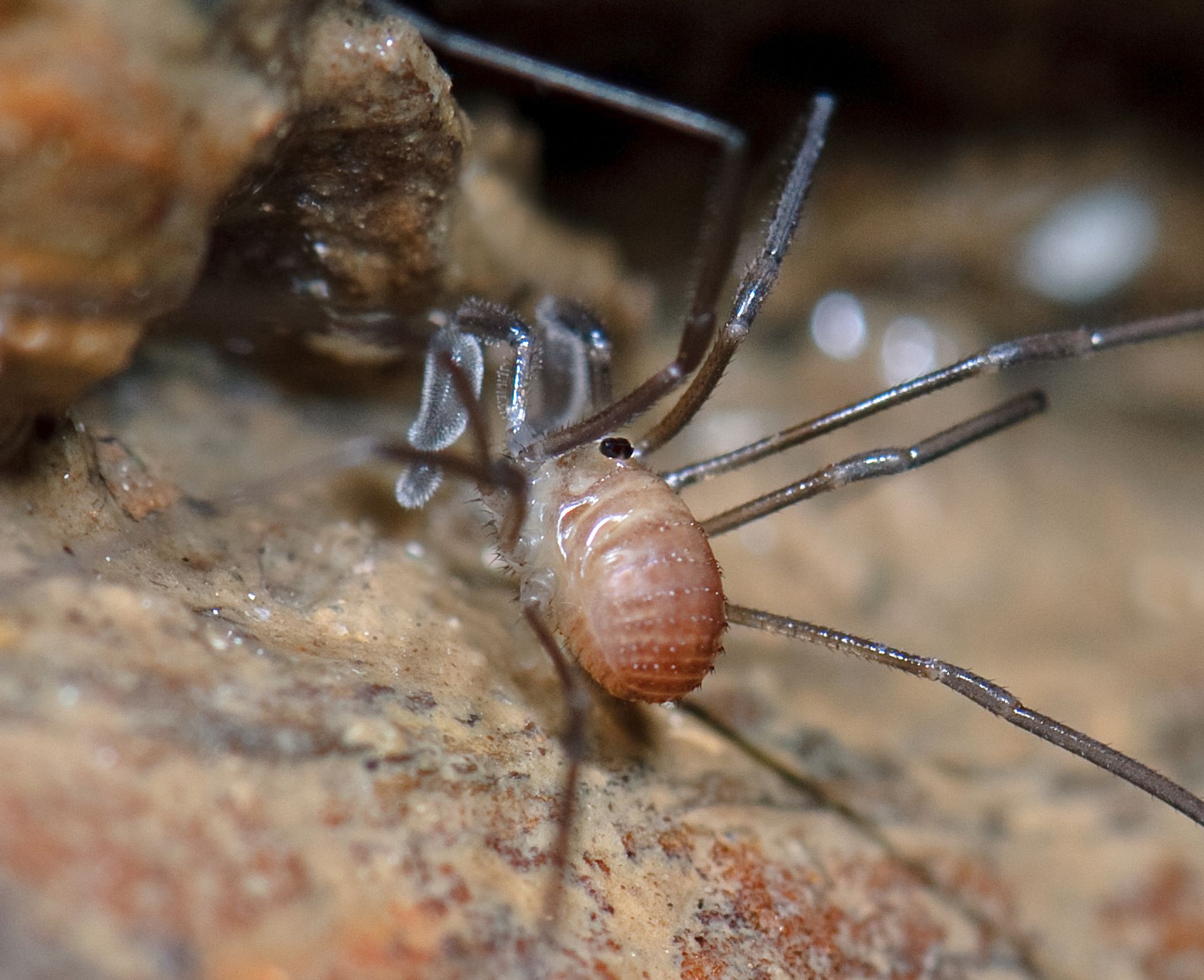
Sabacon cavicolens is a small harvestman in the Sabaconidae, originally described from cave in Kentucky. Males measure slightly over 2 mm, females approximately 5 mm. The species exhibits a disjunct distribution across eastern North America with a center of diversity in the southern Appalachians. Genetic studies indicate it comprises multiple cryptic lineages shaped by historical vicariance and rare long-distance events.

Pronunciation
How to pronounce Sabacon cavicolens: /ˈsæbəkɒn ˌkeɪvɪˈkoʊlɛnz/
These audio files are automatically generated. While they are not always 100% accurate, they are a good starting point.
Identification
Distinguished from the smaller eastern North American Sabacon mitchelli by larger body size. Closely related to European Sabacon paradoxum but differs in geographic distribution. Identification to level requires geographic context and examination of mature specimens; genetic analysis reveals substantial cryptic diversity within the nominal species.
Images
Appearance
Small-bodied harvestman with pronounced sexual size dimorphism. Males slightly exceed 2 mm in body length; females reach approximately 5 mm. General body plan consistent with Sabaconidae: compact body, long slender legs relative to body size. Specific coloration and detailed not described in available sources.
Habitat
Found in moist, sheltered microhabitats of coniferous forests: under wet rotting logs and on undersides of stones. Originally described from cave environment (Bat Cave, Kentucky). Requires high humidity; specimens difficult to maintain alive outside native conditions. Occupies southern Appalachian cave systems and adjacent forest .
Distribution
Eastern North America: originally described from Kentucky and New Hampshire, subsequently recorded from New York (Ithaca). Range extends south through the mountains of North Carolina. Disjunct documented in the Ozarks, Cumberland Plateau, and southern Blue Ridge. Genetic evidence supports three major geographically cohesive lineages: Ozarks, Cumberland Plateau, and southern Blue Ridge (with the latter showing additional mitochondrial structuring associated with riverine barriers).
Seasonality
appear from mid-autumn onward; delayed at higher elevations. Not observed during daylight hours.
Behavior
Exhibits sluggish movement. Remains sheltered under logs or stones during daylight; activity pattern inferred from collection data. Males of related Sabacon guard clutches, but this has not been specifically documented for S. cavicolens.
Similar Taxa
- Sabacon mitchelliSmaller in eastern North America; S. cavicolens distinguished by larger body size.
- Sabacon paradoxumEuropean closely related but geographically separated; morphologically similar.
More Details
Cryptic species diversity
Molecular studies indicate S. cavicolens as traditionally defined comprises multiple -level lineages. A conservative interpretation recognizes three cryptic species corresponding to the Ozarks, Cumberland Plateau, and southern Blue Ridge. The Blue Ridge lineage shows further mitochondrial structuring correlated with riverine barriers, yet also exhibits evidence of extensive female-based range expansion northward and westward.
Biogeographic history
The exemplifies a 'common vicariance, rare ' pattern: ancient fragmentation created genetically distinct lineages, while occasional long-distance dispersal events—likely under unusual environmental conditions—established widespread haplotype distributions and occasional sympatry of divergent lineages.
Sources and further reading
- BugGuide
- Wikipedia
- GBIF taxonomy match
- iNaturalist taxon
- NCBI Taxonomy
- Catalogue of Life
- Surveying for the Maerdy Monster Millipede - Buglife Blog - Buglife
- Cynnal arolygon Miltroed Anghenfil y Maerdy - Buglife Blog - Buglife
- Biogeographical evidence for common vicariance and rare dispersal in a southern Appalachian harvestman (Sabaconidae, Sabacon cavicolens)