
Aphonopelma paloma
Prentice, 1993
Paloma dwarf, Paloma Dwarf Tarantula
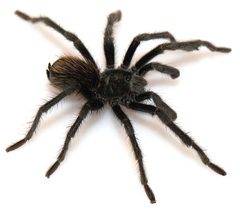
Aphonopelma paloma, commonly known as the Paloma dwarf, is the smallest known of tarantula, with a leg span of approximately 5 cm. This diminutive theraphosid is native to southern Arizona and is notable for its extremely small burrow entrances, measuring only 5–10 mm in width. The species was described by Prentice in 1993 and is considered difficult to detect in the field due to its small size and cryptic habits.


Pronunciation
How to pronounce Aphonopelma paloma: /əˌfɒnoʊˈpɛlmə pəˈloʊmə/
These audio files are automatically generated. While they are not always 100% accurate, they are a good starting point.
Identification
Distinguished from all other Aphonopelma by its exceptionally small size. The burrow entrance (5–10 mm width) is markedly smaller than those of sympatric tarantulas. Specimens require close examination to confirm identity, as small juveniles of larger species may appear similar.
Images
Habitat
Occurs in southern Arizona. Specific microhabitat details are limited, but the constructs small burrows in ground substrate.
Distribution
to southern Arizona, United States. Precise range boundaries are poorly documented due to the ' cryptic nature and difficulty of detection.
Behavior
Constructs and occupies small burrows with entrances measuring 5–10 mm in width. The small entrance size contributes to the being easily overlooked during surveys.
Human Relevance
Occasionally maintained in captivity by arachnid enthusiasts; one specimen was displayed at the Bohart Museum of Entomology open house as part of an educational exhibit.
Similar Taxa
- Aphonopelma chalcodesSympatric in southern Arizona but substantially larger as ; burrow entrances correspondingly wider
- Juvenile Aphonopelma spp.Juveniles of larger may overlap in size with A. paloma, but attain much greater size at maturity
More Details
Conservation status
The ' restricted distribution and highly specific requirements may warrant conservation attention, though no formal assessment has been published.
Research significance
The extreme miniaturization of this relative to other theraphosids makes it of interest for studies on body size evolution in mygalomorph spiders.
Sources and further reading
- BugGuide
- Wikipedia
- GBIF taxonomy match
- iNaturalist taxon
- NCBI Taxonomy
- Catalogue of Life
- An Arachnid Kind of Day | Bug Squad
- Tarantulas to Grab the Spotlight at UC Davis Seminar on April 21 | Bug Squad
- Congrats to These Top UC Davis Graduating Seniors in Entomology | Bug Squad
- Will climate change be a threat for a new tarantula species?
- New tarantula named after Johnny Cash among 14 spider species found in the United States | Blog
- Bug Eric: Spider Sunday: Arizona Blonde Tarantula