
Aphonopelma moderatum
(Chamberlin & Ivie, 1939)
Rio Grande Gold Tarantula
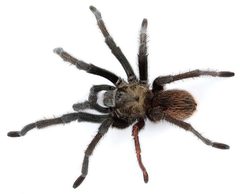
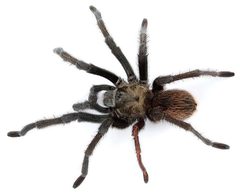
Aphonopelma moderatum, commonly known as the Rio Grande Gold Tarantula, is a of tarantula to the Rio Grande Valley of Texas. It is a medium-sized member of the Aphonopelma, with females exhibiting distinctive orange and black coloration and exceptional longevity. The species is known for its docile temperament in captivity and has been observed in burrowing as spiderlings, though often occupy hides rather than constructing deep burrows.

Pronunciation
How to pronounce Aphonopelma moderatum: /əˌfoʊnəˈpɛlmə moʊˈdɛˌreɪtəm/
These audio files are automatically generated. While they are not always 100% accurate, they are a good starting point.
Identification
Distinguished from other Aphonopelma by the specific pattern of orange and black on female legs: orange , black patella, orange tibia, black and . Males are identified by entirely black legs and dark brown contrasting with the black, dark orange-haired opisthosoma. Differentiation from sympatric Aphonopelma species requires examination of genitalia and geographic confirmation within the Rio Grande Valley of Texas.
Images
Appearance
Females possess an orange to tan with a slightly darker opisthosoma. Legs are mainly orange: orange, patella black, tibia orange, with and fully black. Males have a dark brown carapace, black opisthosoma covered with dark orange hairs, and entirely black legs.
Habitat
Found in the Rio Grande Valley of Texas. Specific microhabitat details are limited, but the has been observed in burrowing as spiderlings and in captivity occupies hides or remains in the open rather than constructing extensive burrows.
Distribution
to the Rio Grande Valley of Texas, United States. Restricted to this specific region of southern Texas.
Seasonality
Activity patterns specific to this are not documented. As with other Aphonopelma species, males may be more visible during warmer months when seeking mates.
Life Cycle
Females live 22 to 40 years. Males live approximately 7 years. Developmental details beyond longevity are not documented for this specifically.
Behavior
In captivity, displays docile ; if frightened may flick or flee, though this is uncommon. Biting is rare and venom is mild. Spiderlings are more prone to burrowing, while typically use hides rather than constructing burrows and often remain visible in the open.
Human Relevance
Kept in captivity due to docile nature. may cause irritation if contacted. Venom is mild and bites are rare.
Similar Taxa
- Other Aphonopelma speciesMany Aphonopelma share similar body plans and coloration; A. moderatum is distinguished by its specific orange-black leg pattern in females and geographic restriction to the Rio Grande Valley of Texas
More Details
Taxonomic history
Originally described as Delopelma moderatum by Chamberlin & Ivie in 1939, later transferred to Aphonopelma
Captive care notes
in captivity do not require deep substrate for burrowing and will typically use provided hides; this differs from the burrowing observed in spiderlings
Sources and further reading
- BugGuide
- Wikipedia
- GBIF taxonomy match
- iNaturalist taxon
- NCBI Taxonomy
- Catalogue of Life
- Tarantulas to Grab the Spotlight at UC Davis Seminar on April 21 | Bug Squad
- Will climate change be a threat for a new tarantula species?
- New tarantula named after Johnny Cash among 14 spider species found in the United States | Blog
- Bug Eric: Spider Sunday: Arizona Blonde Tarantula
- arachnid | Blog