
Calisoga
Chamberlin, 1937
Species Guides
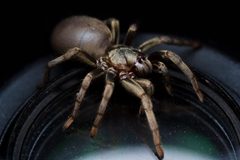
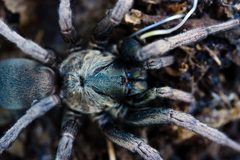
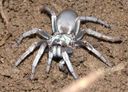
1- Calisoga longitarsis(False Tarantula)
Calisoga is a of mygalomorph spiders in the Nemesiidae, first described by Ralph Vary Chamberlin in 1937. The genus comprises five , all to the United States. Calisoga spiders are notable for their distribution pattern around the Central Valley of California, which has made them a significant study system for understanding ring speciation dynamics in mygalomorph spiders. Genetic studies indicate this is a lineage-rich complex with complex evolutionary history.
Pronunciation
How to pronounce Calisoga: //kæ.lɪˈsoʊ.ɡə//
These audio files are automatically generated. While they are not always 100% accurate, they are a good starting point.
Identification
Calisoga can be distinguished from other Nemesiidae through molecular and phylogenomic data; specific morphological diagnostic characters for field identification are not detailed in available sources. The genus is recognized as part of a lineage-rich complex of California mygalomorph spiders with distinctive biogeographic patterns.
Images
Appearance
Mygalomorph spiders with robust, stocky bodies typical of the infraorder. Like other Nemesiidae, they possess two pairs of and downward-pointing fangs that strike vertically rather than pinching laterally. Specific morphological details distinguishing Calisoga from related are not documented in available sources.
Habitat
Found in surrounding the Central Valley of California. Specific microhabitat preferences (e.g., burrow depth, substrate type, vegetation association) are not documented in available sources.
Distribution
to the United States. All five occur in California, distributed around the Central Valley in a ring-like pattern.
Ecological Role
As mygalomorph spiders, they function as soil-dwelling , though specific ecological impacts have not been quantified in available sources.
Similar Taxa
- Other Nemesiidae generaCalisoga shares -level characteristics including mygalomorph body plan and vertical fang orientation; distinguished by genetic data and California-specific distribution pattern
- Other California mygalomorph spidersSympatric with other mygalomorph lineages in the California Floristic Province; differentiated through phylogenomic analysis and distinctive ring distribution around Central Valley
More Details
Ring speciation research
Calisoga has become an important study system for testing models of ring speciation and broken ring dynamics. Research by Monjaraz-Ruedas and colleagues uses ultra-conserved elements (UCEs) and mitogenomes to examine timing, ancestry, connectivity, and terminal overlap predictions in this system.