
Hexura rothi
Gertsch & Platnick, 1979
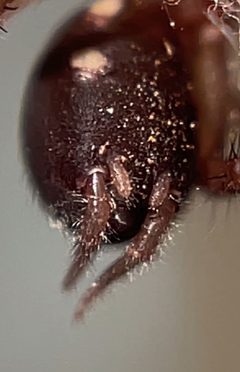
Hexura rothi is a spider described by Gertsch & Platnick in 1979 from the western United States. It belongs to the Antrodiaetidae, having been transferred from Mecicobothriidae in 2019 based on phylogenetic revisions. The species is distinguished from its Hexura picea by possessing two pairs of rather than three. It occupies a restricted geographic range in the coastal and montane forests of southern Oregon and northern California.
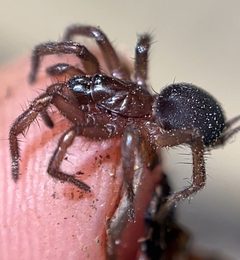
Pronunciation
How to pronounce Hexura rothi: //hɛkˈsʊɹə ˈɹoʊθi//
These audio files are automatically generated. While they are not always 100% accurate, they are a good starting point.
Identification
Distinguished from Hexura picea by having two pairs of versus three pairs. Additional diagnostic characters for this have not been published in readily accessible sources.
Images
Habitat
Mesic forest environments in the southern Central Oregon Coast Ranges and Klamath Mountains, extending into Del Norte County, California. Specific microhabitat preferences (e.g., burrow depth, substrate type) have not been documented.
Distribution
Southern Central Oregon Coast Ranges through the Klamath Mountains to Del Norte County, California, USA.
Similar Taxa
- Hexura piceaCongeneric distinguished by count: H. rothi has two pairs, H. picea has three pairs.
More Details
Taxonomic history
Originally described in Mecicobothriidae, H. rothi was transferred to Antrodiaetidae in 2019 following molecular phylogenetic studies that reorganized mygalomorph spider classification.